(SeaPRwire) – By: Marcus Sinclair
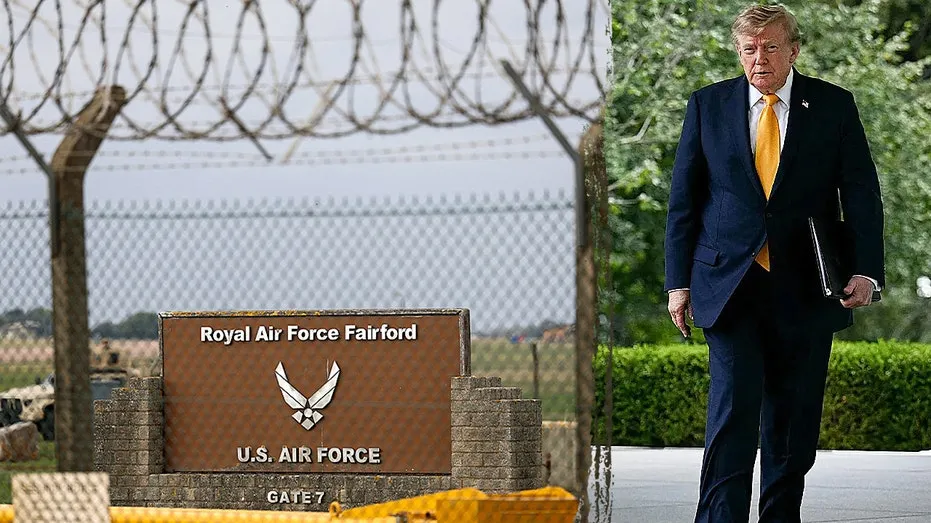
Five arrests outside RAF Fairford weren’t just another counterterrorism sweep in a busy news cycle. They were a stress test for the entire Anglo-American security architecture deployed across Europe. Gloucestershire, a county better known for its hills than hardware, suddenly became the fault line where deterrence meets asymmetric vulnerability. I’ve spent years briefing defense officials in London, Brussels, and Washington on forward-deployment risk. What happened Sunday wasn’t unprecedented. But the convergence of factors makes it dangerous. Five individuals, three vans, a primary US bomber base, and a confirmed Iranian warning issued just weeks before. Each element alone is manageable. Together, they signal something more concerning about the penetration depth of adversarial networks in forward-deployed Western infrastructure. The base sits 80 miles southwest of London. It’s the primary European staging point for American strategic bombers. When five people with three vans get close enough to trigger a Delta alert, the threat model has shifted. This isn’t about whether the plot succeeded. It’s about how close the line between deterrence and failure actually is. The intelligence picture is murky but not unknown. Multiple agencies had the suspects under watch. The fact that they still got close enough to trigger arrests rather than interdiction at a further remove tells you something about the operational gaps in monitoring forward-deployed assets. The gap between what intelligence services can observe and what they can prevent at operational distance is the most dangerous variable in the entire scenario.
Five men were detained Sunday near RAF Fairford in Gloucestershire. They were initially held under Britain’s Explosives Act before being formally arrested on terrorism charges. Three vans were reportedly present at the scene. Trump confirmed US authorities had been monitoring the suspects before capture. He told reporters in Chicago that “they were looking to do big damage to our fort.” British counterterrorism police and US law enforcement are now jointly investigating. Former Trump White House official Morgan Murphy stated that every phone record, every bank account, and every rental receipt will be cross-referenced through both British and American intelligence channels. If the trail leads to Tehran, he said, it will be found. Andrew Badger, a former Defense Intelligence Agency official, noted this wasn’t an amateur lone wolf operation. Five individuals, three vans, potential vehicle-borne explosive devices coordinated across multiple entry points. He outlined a scenario where the first van detonates at the gate to draw attention, while subsequent vehicles push deeper toward the bomber hangars. The UK government previously authorized US forces to use RAF Fairford and Diego Garcia for limited defensive operations, including destroying Iranian missiles and launchers at their source. Iran’s Islamic Revolutionary Guard Corps responded by warning that any base used to attack Iranian territory would be considered a legitimate target. Tehran had also explicitly warned London in July to keep American bombers off Fairford. A local councilor confirmed there had been a specific Iranian security threat roughly six weeks prior. Surveillance around the area was increased at that time. RAF Fairford was reportedly placed on Delta alert, the highest security state within the military base system. As Badger put it, this means “an imminent terrorist attack is inbound.” He also flagged RAF Welford as a potential secondary target. It’s Europe’s second-largest weapons and ammunition depot, primarily supporting operations at Fairford.
The end-game here isn’t purely about attribution. Badger himself cautioned against assuming Tehran’s responsibility. He pointed to Russia’s ongoing gray zone and hybrid warfare campaigns across Europe. He also cited persistent Islamic extremist threats as an active risk in the UK. The attribution question matters for legal accountability, but it doesn’t determine the strategic recalibration already underway. Security protocols across European US installations will rise. Patrol frequencies will increase. Access controls will tighten. The Delta alert designation signals that intelligence agencies have assessed an imminent threat level that won’t be downgraded for weeks, perhaps months. More frequent security patrols. More restricted perimeters. Higher barriers to routine access. The bureaucratic overhead alone will slow response times by degrees that matter in a crisis scenario. Morgan’s argument that the answer should be “more bombers, not fewer” reveals the escalation trap clearly. Tehran warned London to withdraw bombers. Retaliating with increased deployment hands adversaries their desired provocation. Standing down concedes operational freedom of movement to Iranian proxies. Neither option resolves the underlying deterrence problem. The deterrence gap isn’t solved by adding more targets. It’s solved by making the cost of attacking those targets unacceptably high. Right now, that equation is broken. What will actually unfold is a slow bleed of operational tempo. US strategic air assets will cycle faster through Diego Garcia or home bases to avoid concentration risk. European partners will face mounting political pressure to limit US forward deployments on their territory. The cost won’t manifest as a single dramatic escalation event. It will be the cumulative erosion of rapid-response capability that made US forward deployment economically and strategically efficient in the first place. If the trail definitively leads to Tehran, expect a surgical response rather than a full campaign. Trump’s administration has signaled a preference for targeted retribution over broad military engagement. The question is whether a surgical response actually satisfies a deterrence framework when adversaries understand the tempo cost of concentration. They will test again. The base security model designed for Cold War nuclear parity assumptions doesn’t account for five vans and asymmetric determination. That gap is what Fairford exposed.
Author bio: Marcus Sinclair, a Senior Fellow at a prominent European geopolitical and security think tank specializing in transatlantic defense architecture and asymmetric threat analysis.