(SeaPRwire) – By: Gavin Thorne
The riots in Paris are not really about tuition fees or grocery bills anymore. They are about April and May. Emmanuel Macron has six months left in office, and every faction in French politics has figured out that a burning barricade is a campaign asset. The students marching in Place de la République think they are the protagonists. They are not. They are the raw material for a succession fight, and both the far left and the far right are strip-mining their anger for votes.
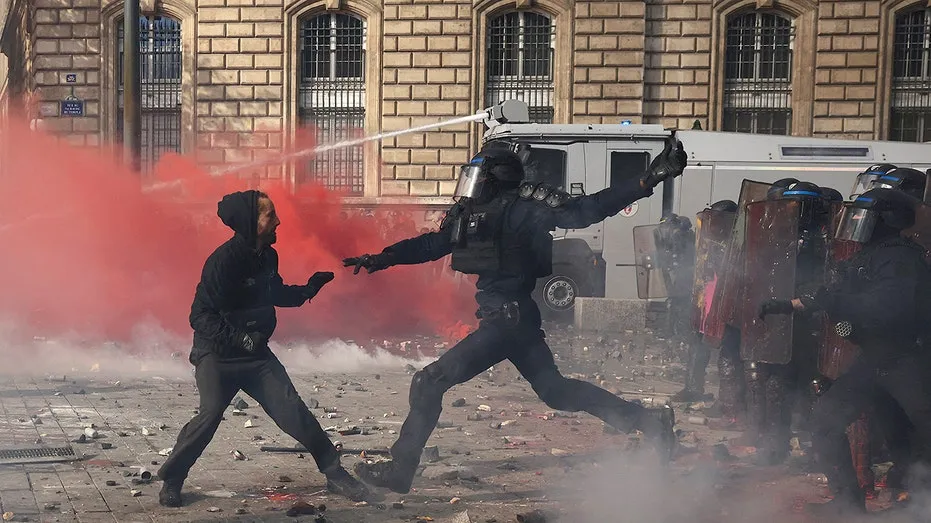
The facts on the ground are grim and getting worse. Demonstrations have now run four consecutive weeks. Saturday’s national day of protest over living costs and student grievances turned violent in Paris and other major cities. Hooded, masked groups threw fireworks at officers. Police answered with tear gas and water cannons. The interior ministry counted assaults on police, looting, damaged public buildings, and at least 272 arrests nationwide in a single day. The cumulative toll is staggering. Prime Minister Sébastien Lecornu told Parliament that 937 police officers and 149 teachers and school staff have been injured since the protests began.
Now look at what the Élysée actually said. Macron, in his weekly cabinet meeting, stressed that young people have legitimate concerns. Then came the pivot. Government spokeswoman Maud Bregeon relayed his view that these concerns are being exploited for political purposes and turned into urban violence. Ministers were ordered to produce concrete responses within weeks. Lecornu went further and named names. He accused the student movement of being instrumentalized by the allies of France Unbowed for electoral reasons. Jean-Luc Mélenchon marched in a Paris protest this week. LFI councilors, deputies, and mayors have joined student blockades in multiple cities. Meanwhile, Marine Le Pen, the leading candidate to replace Macron, backed the police and blamed students for the violence. Everyone is positioned. Nobody is governing.
The most revealing pressure point is inside the security apparatus itself. The interior ministry has opened internal investigations into 36 allegations of police violence against demonstrators. Fair enough. But the national police union, Alliance Police Nationale, has filed a lawsuit against the government, accusing it of putting lives in danger through contradictory orders. Officers feel betrayed, abandoned, left to fend for themselves. Nearly 8,000 people have been arrested. Union representative Walid Hrar invoked 1789 and Robespierre to describe a country that reacts rather than anticipates. When your riot police are suing you while your justice ministry investigates them, the chain of command is broken.
The contagion has crossed borders. Several hundred mostly young people clashed with police in Brussels, in protests at least partly inspired by France. A similar action hit Liege. Belgian Interior Minister Bernard Quintin posted on X that this is no longer mere protest, calling it organized, repeated violence meant to destabilize society. Small solidarity events in Luxembourg and French-speaking Switzerland stayed peaceful. Macron, from a European Council summit in Brussels, repeated that protest is a constitutional right but one tied to respect for people and property. Officials are quietly hoping the Toussaint holiday, closing schools until November 2, drains the streets.
Watch what happens the day after the holiday ends, because whoever still controls the street in November will control the framing of the spring election.
Author bio: Gavin Thorne, an investigative journalist tracking special interests and legislative affairs based in Washington, D.C., covering protest politics, party machinery, and the money behind street movements.