(SeaPRwire) – By: Douglas Vance
The Strait of Hormuz just got a reminder that it is not a body of water. It is a fuse. Two ADNOC vessels were struck while transiting the narrows. Abu Dhabi National Oil Company confirmed no injuries and said the situation was contained. The UAE foreign ministry condemned the attacks as Iranian actions. None of that matters in the way it should. What matters is that the waterway through which roughly one-fifth of the world’s oil passes is now contested terrain with live weapons involved. The headline story is not the two boats. The headline story is the message. Iran is rehearsing how to make an economic stranglehold physically costly. Treasury Secretary Scott Bessent promised the harshest economic isolation in history. He said Washington would apply “measures like we have never been seen in the history of economic isolation on a country.” Tehran is preparing to answer that sentence in torpedoes and missiles, not diplomatic cables.
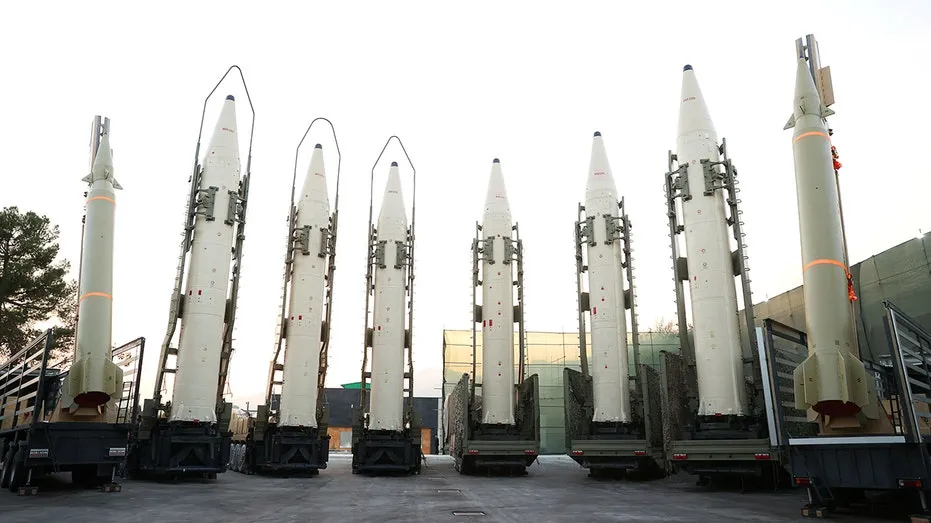
The strategic arithmetic is ugly and transparent. Behnam Ben Taleblu, a senior fellow at the Foundation for Defense of Democracies, told Digital that Tehran is likely to escalate militarily as sanctions tighten. He used a specific window: early fall. He predicted Iran would “kinetically push back against Trump’s economic policy.” Taleblu drew a direct line to 2019. That summer saw tanker attacks, drone swarms on oil facilities, and a brief war that began with a drone strike killing a U.S. general. The regime is not trying something new. It is running a playbook it has stress-tested before. Shrinking oil revenues plus a de facto naval blockade equal desperation. Taleblu said Iran would compile a “tiered list of targets.” The tiers run from immediate value to greater economic value to targets that might provoke a direct or indirect U.S. response. That is not rhetoric. That is targeting doctrine being openly described in public. Ships first. Then bases. Then Arab infrastructure in the Persian Gulf. The order of operations reveals a calculated escalation ladder.
The diplomatic scaffolding has already collapsed. The interim memorandum of understanding, signed in June, called for “immediate and permanent termination of military operations on all fronts.” It gave both sides a 60-day window to negotiate a final agreement. Trump declared on July 7 that the pact was over. A senior Iranian source told Reuters on August 12 that no talks exist about extending the ceasefire. Tehran wants Washington to return to the framework and set a definitive timeline. Washington appears to be choosing sanctions instead. The deadline that would have triggered serious negotiation mechanics landed on August 17. It came and went. Now the control question dominates everything. Hossein Taeb, the newly appointed head of Iran’s Basij paramilitary force, stated Thursday that the Strait of Hormuz remains “under Iran’s control and management.” Trump had asserted the day before that the United States held “total control” over the waterway. Two governments cannot both claim absolute command of the same two nautical miles of open water. One of them is bluffing. The Strait is roughly 21 miles wide at its narrowest point. Fast-attack craft, mine-laying capability, and coastal missile batteries make it a near-perfect asymmetric chokepoint. A single successfully laid minefield or a coordinated swarm attack does not require Iran to “control” the Strait in any conventional sense. It only requires Iran to make transit dangerous enough to spike insurance rates and reroute tonnage.
This is where the proxy layer becomes decisive. Taleblu characterized Iran’s approach toward traditional U.S. Gulf partners as “a knife in the back and a handshake in the front.” The ADNOC strikes illustrate the tactic perfectly. Commercial shipping gets hit. The Gulf state bleeds economically. The U.S. gets pulled deeper into a defensive posture it has not formally declared. Iran simultaneously pressures Washington back toward the MOU without ever publicly conceding leverage. Taleblu said Iranian escalation and diplomatic finesse are designed to “back the Trump administration into the MOU again.” The regime refuses to grant Washington the optics of victory. Trump has framed the sanctions-first strategy as “low-key.” Taleblu called those “high-impact tools.” He closed with a warning that the escalation of summer 2019 could be “a prologue.” If that framing holds, the next six weeks carry genuine kinetic risk. A single miscalculated strike on a U.S. naval asset in the Strait does not produce a diplomatic memo. It produces a chain of response that neither side has a clean exit from.
Author bio: Douglas Vance, a maritime defense scholar and naval intelligence briefing coordinator with two decades of experience analyzing chokepoint geopolitics and asymmetric naval warfare in contested waterways.