(SeaPRwire) – By: Julian Holbrooke
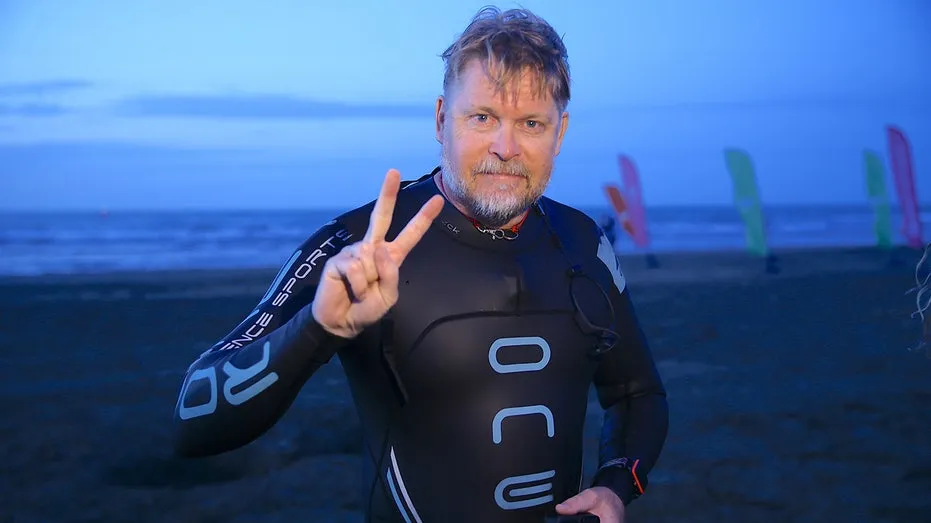
Karl Bushby swam the English Channel on October 5th this year. He touched British soil after 28 years on foot. He has roughly 240 miles left to reach his mother’s house in Hull. The timing of that number matters more than most people realize. Two hundred and forty miles is nothing at the end of a quarter-century walk. It is also an enormous distance when everything else has already been accounted for.
His journey began on November 1st, 1998 in Chile. He carried only a few hundred dollars. He was an ex-paratrooper at the time. The original plan called for 12 years. The world is bigger than any budget or schedule allows. What kept him moving was not geographic ambition. It was the friction generated by institutions that control movement.
Russia denied his visa in April 2012. That single bureaucratic stamp froze his entire expedition. He did not accept the decision quietly. He walked in the wrong direction as a form of protest. He made his way to the Russian Embassy in Washington D.C. The ban was overturned. He continued. This is the moment that defines everything that followed. A man in his forties chose to spend months walking backward across a continent because a consular officer said no.
That sequence reveals something the travel industry does not want to discuss. Borders are not neutral lines on a map. They are decision points where individual lives intersect with administrative power. Bushby’s entire route was shaped by the same logic that governs every commercial migration strategy today. You move where you are allowed to move. You proceed when the visa comes through. You wait when it does not.
He crossed from Alaska into Russia after the Bering Strait froze. He moved through Mongolia and China. He swam the Caspian Sea from Kazakhstan into Azerbaijan. That swim alone required logistics that no tour operator would endorse. He entered Europe through the same northern corridor his father imagined decades earlier in a birthday card that referenced two soldiers arguing over a seemingly impossible walk from London to New York via the strait.
The obstacles multiplied because the world changed around him. The 2008 financial crash reduced his resources. COVID-19 collapsed border availability. Geopolitical tensions created new restrictions. Detention episodes interrupted his pace. Each one was a structural barrier disguised as a routine policy update. The physical geography never posed the real threat. The paperwork did.
Bushby’s own assessment cuts through the romantic framing. The world looks bigger and scarier than it actually is. People consistently underestimate their own capacity. He has walked 30,000 miles across 29 countries. His knees and ankles now signal that the body has reached its limit. He knows it is time to stop. That awareness is itself a form of triumph.
What remains is a single, uncomfortable data point for anyone managing cross-border operations today. Institutions respond to pressure. A man walking to an embassy with nothing but his own two feet changed a diplomatic outcome. The lesson applies directly to supply chain resilience, market entry strategy, and any venture that depends on regulatory approval chains. You cannot assume that the first denial is final. You also cannot assume that the system will accommodate you without sustained effort.
The real insight from Bushby’s journey is not about endurance. It is about structural leverage. Every visa denied, every border closed, every flight cancelled represents a decision point where the individual either adapts or stalls. Bushby adapted for 28 years. That adaptation is the only model that actually works when geopolitical friction becomes the primary variable.
Author bio: Julian Holbrooke, an overseas international relations analyst who frequently contributes to major European daily newspapers, specializing in the intersection of bureaucratic policy and human-scale endurance.