By: Douglas Vance
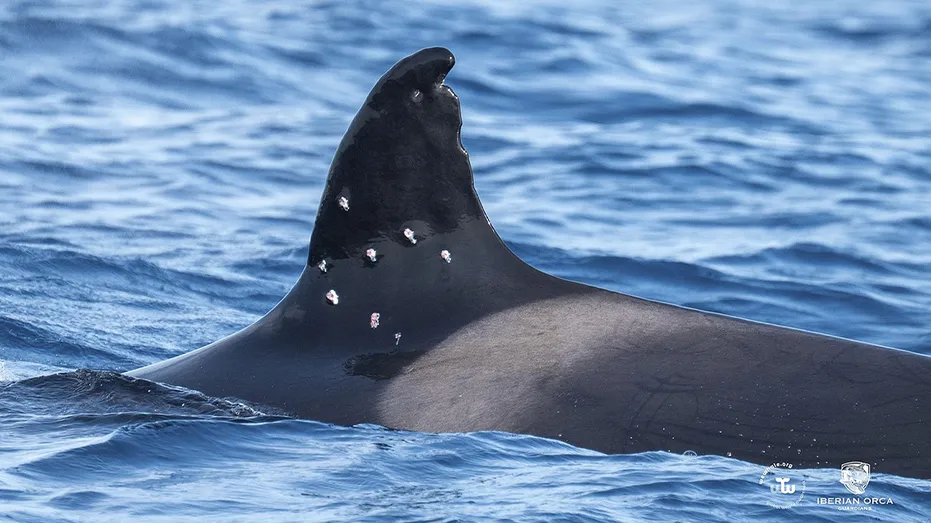
(SeaPRwire) – Toñi didn’t survive sixty years in the Strait of Gibraltar just to take ten shotgun blasts to the dorsal fin. The oldest known Iberian orca surfaced recently with fresh, horrifying evidence that human frustration with local cetacean encounters has crossed the absolute line into criminal violence. Conservationists from WeWhale and the Iberian Orca Guardians spotted the distinct pellet impacts scattered across her left side, noting that at least two or three projectiles likely passed straight through the vascular tissue of her fin. This isn’t just a wildlife tragedy. It’s a stark indicator of what happens when sustained maritime tension goes completely unchecked by effective regional management.
Spain’s Ministry for the Ecological Transition, known as MITECO, opened preliminary investigative proceedings after receiving authorized reports on August 11. Government bodies and conservation groups agree that the wound distribution matches a close-range shotgun discharge. Officials point out that hitting protected species carries criminal liability and fines up to 2 million euros, roughly 2.3 million dollars. Yet, identifying a shooter on the open water remains an uphill battle. For years, the same regional waters have hosted repeated, documented interactions between Iberian orcas and passing vessels, turning a shared blue corridor into an arena of escalating mutual distrust.
That persistent boat friction has tested the patience of sailors transiting the Strait and Gulf of Cádiz since 2020. Authorities have repeatedly urged mariners to avoid lethal deterrents, warning that violent reactions solve nothing. But warnings don’t stop desperate skippers or malicious actors from taking matters into their own hands. Toñi, affectionately dubbed ‘La Abuela’ or the grandmother, now bears the physical scars of that systemic failure. Because a dorsal fin relies on a rich blood supply to regulate body temperature, lodged metal or subsequent tissue swelling could easily trigger a life-threatening infection, even though she currently hunts normally.
As the General Directorate of Biodiversity continues its investigation, the broader maritime safety framework faces a severe stress test. If shooting an endangered cetacean becomes the default neighborhood response to territorial disputes at sea, legal penalties alone won’t deter future attacks. Without immediate, aggressive monitoring of coastal vessels and ironclad enforcement of protective buffers, the oldest pillar of this vulnerable population will pay the ultimate price for human impatience.
Author bio: Douglas Vance, a maritime defense scholar and naval intelligence briefing coordinator tracking exclusive economic zone boundaries and marine geopolitical conflicts.