(SeaPRwire) – By: Julian Holbrooke
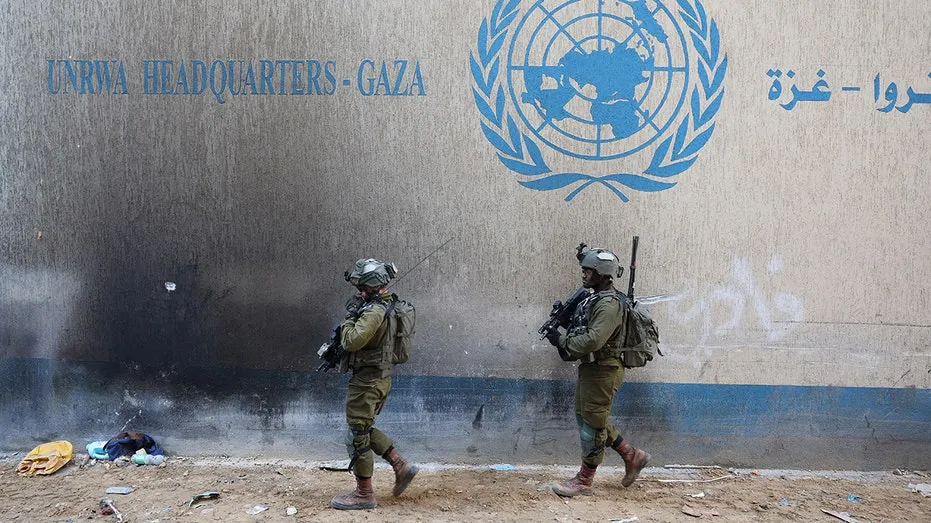
The United Nations Relief and Works Agency for Palestine Refugees in the Near East (UNRWA) has perfected the art of bureaucratic theater. It is a performance where the director, the actors, and the audience are all the same entity. When Donald Trump amplifies a report about alleged Hamas ties among staff, he is merely the loud noise in the room, not the source of the rot. The real scandal is not that a few bad apples exist, but that the entire barrel is rotting from the inside out, disguised by a veneer of “reform” that exists only on paper. The agency has effectively turned the concept of accountability on its head, demanding that the world accept a self-reported grade of 82% when the evidence suggests a failing score. This is not merely a management failure; it is a deliberate obfuscation of reality.
The agency’s leadership, led by Commissioner-General Philippe Lazzarini, has loudly proclaimed the completion of 41 out of 50 reforms recommended by former French Foreign Minister Catherine Colonna. This claim is a masterclass in semantic gymnastics designed to obscure the truth. UN Watch says that when it compared UNRWA’s claims with what Colonna actually recommended, at most 13 of the 50 reforms had been completed as prescribed. The discrepancy lies entirely in the definition of “completion.” UNRWA counts drafting a policy, launching a pilot program, or creating a plan as a finished job. In the real world, a plan is not a reform if it is ignored, unenforced, or blocked by staff unions dominated by Hamas. Hillel Neuer, Executive Director of UN Watch, told Digital that “UNRWA is grading its own homework — and giving itself credit for reforms that exist mainly on paper.” The agency is grading its own homework and giving itself credit for reforms that exist mainly on paper, creating a facade of progress that masks a systemic failure. The Colonna review, commissioned by Secretary-General António Guterres in February 2024, was supposed to be the turning point, yet the agency has already begun to hollow out its own recommendations.
The agency’s defense strategy relies on shifting the burden of verification onto member states. Spokesperson Stéphane Dujarric argues that the agency is not “just checking boxes” and relies on countries like Israel, Jordan, and Lebanon to vet staff. However, this defense crumbles under scrutiny. UNRWA lists a “Commercial Vetting Pilot & Costed Plan” as a completed reform, yet UN Watch points out that a pilot and an implementation plan do not constitute a fully operational outside vetting system. The report also challenges UNRWA’s education reforms. While UNRWA claims to have reviewed textbooks and inspected classrooms, a policy prohibiting incitement remains “in progress,” and Catherine Colonna herself warned of “glorification of jihad” and maps that erase Israel. The UN’s insistence that it is “about implementation” rings hollow when the core mechanisms of discipline are paralyzed by internal obstruction. Neuer rejected the idea that the disagreement is merely about terminology, stating that “teachers tied to terrorist organizations remain in classrooms, Hamas-dominated unions obstruct discipline, and children continue to be exposed to incitement.” These are real-world consequences, not technicalities.
The geopolitical pendulum has swung decisively against the agency. The narrative that UNRWA is merely a victim of political attacks is dead. The evidence of Hamas infiltration and the refusal to implement genuine security measures proves that the agency has become a liability rather than a lifeline. The era of blind trust in UNRWA’s self-assessments is over.
Author bio: Julian Holbrooke, an overseas international relations analyst who frequently contributes to major European daily newspapers.