(SeaPRwire) – By: Marcus Sinclair
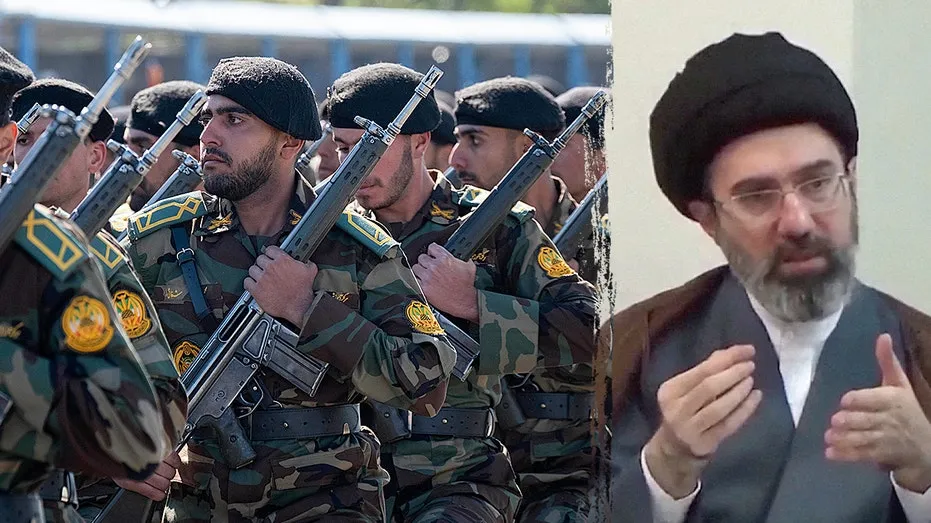
The strangest signal out of Tehran this week was not defiance. It was priorities. On October 8, Supreme Leader Mojtaba Khamenei took to X to praise not the air force, not the missile corps, but the police. He claimed U.S. and Israeli strikes under Operations Epic Fury and Roaring Lion, launched in February, had failed to shake the country’s domestic security forces. That choice of audience matters. When a wartime leadership spends its rhetorical capital on the Law Enforcement Command, known as FARAJA, rather than on the conventional military absorbing the blows, it is telling you where the regime believes the real threat sits. The anxiety is internal. The fear is not that American bombs will breach the border tomorrow. The fear is that a population watching its air defenses get dismantled might decide the state can no longer protect itself, and by extension, can no longer rule. Meanwhile, on the other side of the world, the U.S. Army’s Training and Transformation Command quietly published a “Know the Threat” recognition guide on September 24, complete with silhouettes of Iranian special forces soldiers and inventories of AKM rifles, Iranian-made Masaf-2 rifles, German-designed G3s, MG3 machine guns, and RPG-7 launchers. Armies do not print battlefield identification cards for wars they consider finished. Both capitals, in their own way, are preparing for a ground that has not yet been crossed.
The facts deserve careful laying out, because the numbers cut against the propaganda on both sides. Iran’s security structure rests on three pillars: the Artesh, the conventional military tasked with territorial defense; the Islamic Revolutionary Guard Corps, which guards the revolution itself and projects power abroad; and FARAJA, which polices the streets. A June assessment by the Jerusalem Institute for Strategy and Security put the Artesh Ground Forces at roughly 350,000 personnel, of whom about 220,000 are conscripts. The same assessment found that Iran’s air, naval, and air defense components suffered severe damage in the opening phase of the U.S.-Israeli campaign. The ground forces, however, remained structurally intact for one simple reason: nobody invaded. Khamenei’s October 8 statement leaned hard into the surviving pillar of control, praising FARAJA personnel for not wavering “even a fraction” and calling for reinforcements in personnel, equipment, and technology, including artificial intelligence for data analysis. FARAJA is commanded by Brig. Gen. Ahmadreza Radan, a man the U.S. Treasury sanctioned in September 2010 for beatings, killings, and arbitrary arrests of protesters after the disputed 2009 election. Iran Human Rights Monitor describes the force as a suppression machine for demonstrations and political monitoring. On the American side, President Donald Trump said on October 8 that Washington would not resume strikes before the November 3 midterms, citing “productive discussions.” The Artesh’s new commander, Maj. Gen. Amir Hatami, appointed in June 2025, fired back on October 6 with claims that Iran’s adversaries faced “historic confusion” and that military production lines never stopped running through the conflict.
Now strip away the theater and look at the cost ledger. Khamenei’s pledge to pump AI-driven analytics into FARAJA is not a modernization program. It is an admission that the state’s coercive capacity, not its deterrent capacity, is what must be rebuilt first. A regime confident in its external position invests in air defense; a regime worried about its own streets invests in surveillance. The U.S. Army’s recognition guide points the other way. Washington’s pause until after November 3 is electoral calendar management, not de-escalation doctrine, and the identification materials suggest planners are gaming out scenarios where American infantry might actually face Artesh conscripts rather than just IRGC proxies. The 350,000-man figure is the crux of the end-game math. An air campaign can wreck radars and runways, but it cannot hold terrain, and a force of that size, even a conscript-heavy one, makes occupation a generational undertaking no American administration entering midterms can sell. Tehran knows this, which is why Hatami brags about production lines and Khamenei brags about police loyalty: deterrence by endurance. The realistic outcome is a frozen escalatory equilibrium, where strikes resume after the election window closes, Iran’s conventional forces stay too broken to project power yet too large to destroy, and the decisive battles happen inside Iranian cities rather than over them. Watch FARAJA’s budget line, not the missile parades. That is where the regime’s survival odds are actually written.
Author bio: Marcus Sinclair, Senior Fellow at a prominent European geopolitical and security think tank, specializing in Middle Eastern force structures, deterrence theory, and the domestic security politics of states under sustained military pressure.