(SeaPRwire) – By: Gavin Thorne
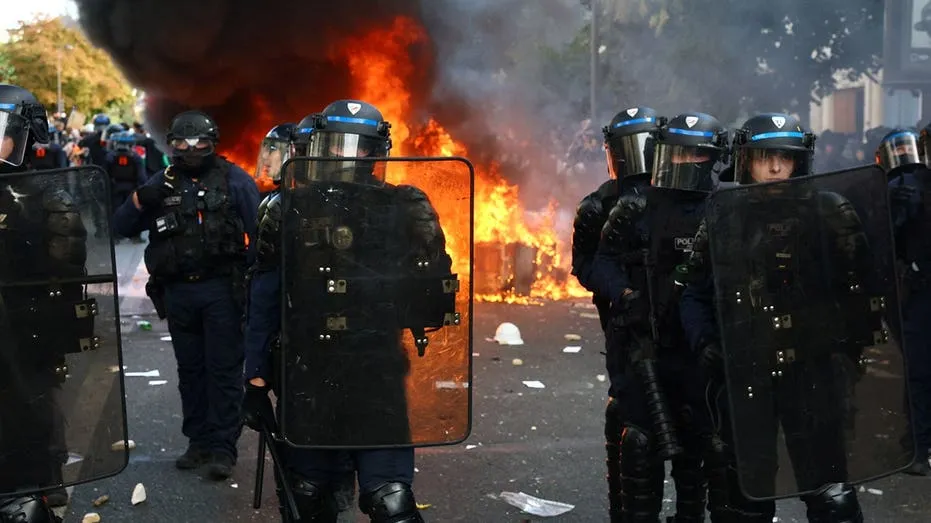
France’s school crisis is not a school crisis. It is a legitimacy crisis with tear gas. On Tuesday, 256,000 people took part in demonstrations nationwide. Paris supplied 56,000 of them. The High School Students Union said over half of France’s high schools were closed or blockaded. The interior ministry counted 6,100 people taken into custody since September. It counted at least 715 injured police officers and 215 injured teenagers. The election to replace President Emmanuel Macron next May is already reading the smoke. The state calls this order. The street calls it abandonment. Both cannot be true. The country is split at the school gate.
The violence is not abstract. Authorities began shutting schools last week. They tried to defuse tensions after widespread damage and mounting injuries. On Tuesday, classes were totally or partially suspended at 891 schools. In Lens, a 15-year-old picked up a police dispersal grenade. It detonated. He lost his hand and part of his lower arm. Interior Minister Laurent Nunez defended the policing. He said the response was proportionate in almost all cases. Prime Minister Sebastien Lecornu asked ministers to address student demands. Those demands include repairs to aging buildings. They include longer lunch breaks. They include a review of the 8 a.m. to 6 p.m. school day. The government is now bargaining over basics.
The students’ complaints are concrete. They point to rundown classrooms. Some lack desks and chairs. They become sweltering in summer without air conditioning. Some are infested with rats. Staff shortages are common. Workloads are exhausting. French high school students’ compulsory classroom hours are among the highest in Europe. A recent Paris graduate, Roberta, told Reuters she wants more money for the national education system. She wants high schools renovated. Felix Barney, a university student, told the Associated Press that the police response was disproportionate. He said it makes no sense to hit minors. These are not luxury demands. They are baseline maintenance demands. They expose a state that has let its schools decay.
The political fight is already bending the facts. Far-left presidential hopeful Jean-Luc Mélenchon decried the government response as repressive. Critics accuse his party, La France Insoumise, of using the unrest to score points in the presidential campaign. They also accuse LFI of inciting violence. LFI has denied the accusations. The Seine-Saint Denis mayor, Bally Bagayoko of LFI, joined students. Video showed him smiling and high-fiving pupils after a trash can was set on fire. The president of the Île-de-France region told Radio Monte Carlo that LFI issued a call to action. The phrase was “Trash your high school.” She said it spread via TikTok challenges. No one owns the streets, but everyone wants the footage.
This is where the schoolyard becomes a campaign stage. Trump wrote on Truth Social that France was facing out-of-control mass migration. He claimed this was about Islam wanting to take over a once great country. Nile Gardiner of The Heritage Foundation told Fox News that Islamists, communists, socialists, and the far-left were joining forces. He called it an outright uprising and insurrection. He said the stakes are incredibly high for the French people. He called it a warning for the United States. French officials cannot dismiss that framing. It turns local repairs into a global ideological proxy fight. LFI denies the TikTok charge. The denial does not erase the video optics. The ballot next May will absorb every insult.
If Lecornu cannot show repaired classrooms and longer lunch breaks before next May, the same teenagers dodging tear gas will decide whether the next president inherits a school system or a battlefield.
Author bio: Gavin Thorne, an investigative journalist tracking special interests and legislative affairs based in Washington, D.C.