(SeaPRwire) – By: Marcus Sinclair
The German federal prosecutor’s office did not uncover a new threat. It attached a criminal case to one that has been hiding in plain view. The accusation is that seven Hamas operatives built weapons depots across Europe and planned an attack near the second anniversary of October 7. That should not be read as an isolated plot. It is the collision of a security failure on the ground, an intelligence failure inside Germany, and a political failure across Europe that treated Hamas as a social welfare network rather than an external operations command. The real shock is not the existence of weapons. It is the timing and the geography. Berlin, Vienna, and the second remembrance date were not random choices. They were a message.
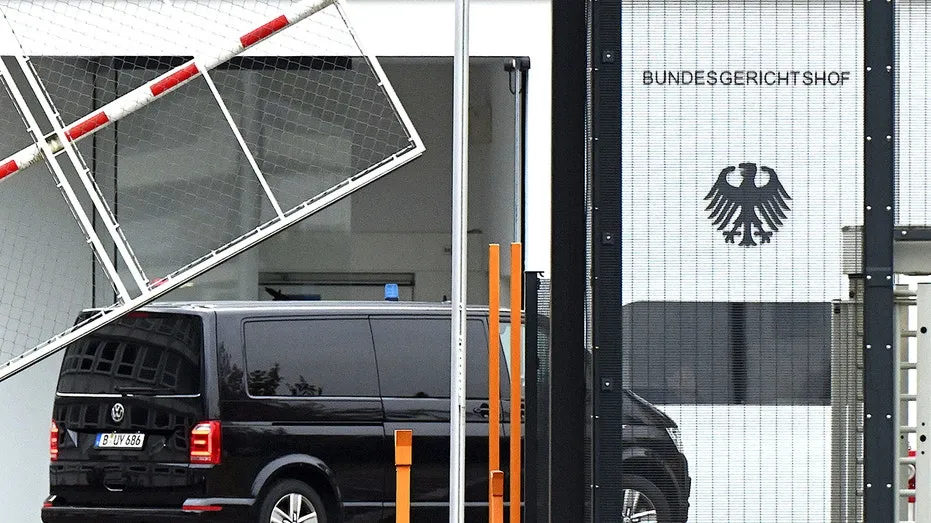
The prosecution’s statement leaves little room for ambiguity. The Qassam Brigades, Hamas’s military wing, began establishing weapons depots in Europe some time ago. No later than July 2025, Hamas planned a concrete assassination in Germany or Austria. Targets included representatives of Israel, people of Jewish faith, and persons with pro-Israel views. The attack was to occur in early October 2025, close to the second anniversary of the 2023 assault on Israel. The seven suspects were arrested between October 2025 and May 2026. The indictment named them by first name and last initial under German privacy rules. German nationals Abed Al G. and Ahmad I., Danish national Yousif C., Lebanese-born Borhan El-K., Wael F.M., and Kamel M., and Bulgarian national Mohammad S. were charged. Prosecutors say the network had obtained a fully automatic rifle, 13 pistols, and more than 700 rounds of ammunition. A separate defendant, Mohammed A., transported some of the weapons to Vienna and stored them there. That detail matters. It shows the operation had already crossed borders and reached the pre-positioning stage. The weapons were not aspirational. They were staged.
The intelligence dimension is worse than the weapons count. Die Welt reported that one of the accused worked as a confidential informant for Germany’s domestic intelligence agency. He continued reporting to his handler while allegedly concealing the full extent of his own role in obtaining ammunition for the group. That single fact should force a hard conversation inside German security agencies. A source was providing information while the network he was inside moved toward operational readiness. Sascha Adamek, author of the 2026 book “Infiltration: Political Islam Continues Its Advance,” told Digital that previous federal governments allowed Hamas and its front organizations to use Germany as a “safe haven” for fundraising, recruitment, and radicalization until 2023. He called the arrangement a dirty deal. The official numbers support his frustration. Germany’s federal domestic intelligence report said Hamas could have had as many as 650 operatives in Germany during 2025. The figure was 550 in 2024 and 450 in 2023. Hezbollah operatives in Germany were estimated at 1,250. The Interior Ministry says Hamas has been banned in Germany since November 2, 2023. Hezbollah has been banned since April 30, 2020. Yet the operational presence grew. The ministry describes Hamas supporters as generally restrained in public and Hezbollah activity as focused on religious, cultural, and educational programs. That distinction is precisely the loophole. Restraint in public is not the same as non-involvement in logistics.
The case also exposes the regional chain. German prosecutors suspect the weapons operation was coordinated from Lebanon. Israel’s Foreign Ministry said the plot was part of a network allegedly using Turkey as a base for terror operations against European targets. The presence of Lebanese-born suspects is not incidental. Hezbollah joined Hamas a day after the Gaza-based movement invaded Israel in 2023 and killed more than 1,200 people. Both organizations are backed by Iran. Matthew Levitt of the Washington Institute told Digital that Hamas continues plotting in Europe, overseen by senior Qassam Brigades officials in Lebanon and with direct ties to senior Hamas leadership. Levitt added that one of the people arrested in Europe is the son of senior Hamas leader Basem Naim. His October 2025 CTC Sentinel article traced a shift toward external operations. He cited a 2024 German prosecution indictment of alleged Hezbollah terrorists planning possible attacks against an American military base and Israel’s embassy. The pattern is no longer hard to identify. Depots, informants, cross-border handlers, and timing around symbolic dates.
That brings the problem back to Berlin. The numbers expose a gap. A legal ban did not shrink the network. It drove it quieter. Germany has strong counterterrorism statutes and an intelligence apparatus capable of running an informant inside a cell. What it lacks is a policy consensus that these networks are operational threats rather than social policy problems. The Interior Ministry says federal and state security authorities consistently investigate leads. That is true. But the investigation only became public after weapons were already in Vienna and after the operational window had passed. The cost of treating Hamas as a fundraising community for years is now visible in the indictment. The dirty deal Adamek described meant no violence inside Germany in exchange for operational tolerance. That bargain was obsolete long before this case. Berlin can ban organizations. It has not yet decided to dismantle them. The next German case will test whether that distinction has finally collapsed.
Author bio: Marcus Sinclair, a Senior Fellow at a prominent European geopolitical and security think tank, focusing on transnational armed networks and European security architecture.