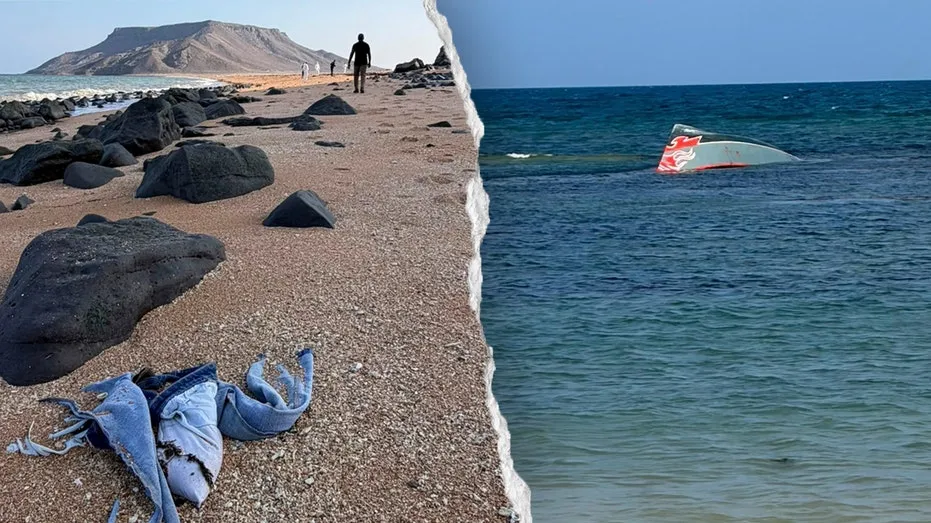
(SeaPRwire) – At least 139 people are dead. Eighty-four are still missing. All eighty-one survivors are Ethiopian nationals. The International Organization for Migration confirmed this on Sunday after an overcrowded boat carrying 305 people capsized Thursday night or early Friday near Guhere, north of Obock in Djibouti.
Amy Pope did not mince words. She said no one boards a vessel like that unless they genuinely believe there is no other safe way out. That sentence carries the weight of someone who has watched this pattern repeat itself across every major migration corridor for nearly two decades. The Horn of Africa to the Arabian Peninsula is not new territory for smugglers. It is not new terrain for desperation. Yet the international response has remained remarkably static.
The IOM routed survivors to its rescue center in Obock. Many had swallowed seawater. They are receiving medical treatment and psychological support. They are in a state of shock. Alexandre Coissac, the IOM chief of mission in Djibouti, described victims being buried without names in common graves. He said it resembled a war situation. The confirmed death toll includes only those buried by Djiboutian authorities. It will rise. Some victims were interred by fellow migrants before officials could verify identities.
More than 900 migrants died or went missing along this same route last year. The IOM’s own data makes clear that this October incident is not an anomaly. It is a continuation. The crossing from the Horn of Africa to Yemen remains one of the most dangerous maritime routes in the world. Smugglers pack vessels far beyond capacity because the profit margins justify the risk. Migrants pay what they can because the alternative feels worse than the sea.
The geopolitical reality is uncomfortable for Western capitals. Djibouti hosts military bases from the United States, China, France, Japan, and others. It is one of the most militarized countries on Earth per square kilometer. Yet when a boat full of Ethiopian nationals sinks off its coast, the strategic conversations in capital cities rarely center on legal migration pathways. They center on border enforcement. They center on deterrence. They center on keeping the problem away from European shores rather than addressing why people leave in the first place.
Gulf states remain the primary destination for Ethiopian migrants seeking work. Saudi Arabia, the United Arab Emirates, and Kuwait absorb hundreds of thousands of Ethiopian laborers annually. But the legal channels are narrow and tightly controlled. Employers sponsor workers through kafala systems that offer little protection. Irregular migration fills the gap. Smugglers exploit it. The boat that sank Thursday night was one of countless vessels attempting to bridge a policy vacuum.
IOM calls for governments and donors to act before the next boat goes down. That plea has been made before. The question is whether any government is willing to expand legal pathways in a region where political incentives reward restriction rather than opening. The answer so far has been no. The bodies in unmarked graves off Djibouti are the result.
Author bio: Marcus Sinclair is a Senior Fellow at a prominent European geopolitical and security think tank, specializing in migration policy, Horn of Africa affairs, and international humanitarian governance.