(SeaPRwire) – By: Marcus Sinclair
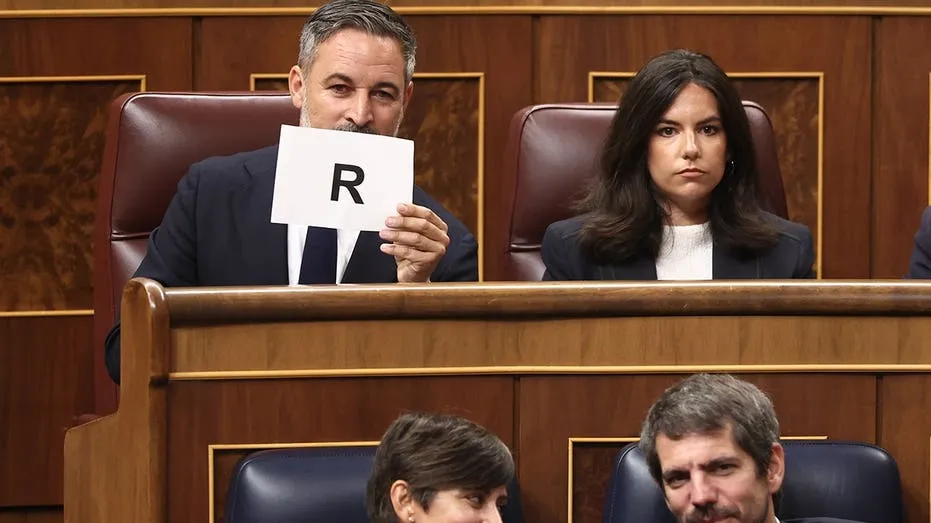
Europe’s southern border has a habit of exposing political weakness at the worst possible moment. This week it happened inside the Spanish parliament, where Santiago Abascal, leader of the Vox party, stood up and called Prime Minister Pedro Sánchez a “traitor” and “a dog” to his face. The trigger was the chaos in Ceuta, the Spanish enclave on the North African coast. Abascal went further, openly asking whether Sánchez was being blackmailed by Morocco. That question matters more than the insults. It points at the deepest anxiety now running through Spanish politics, which is the suspicion that Rabat can turn migration flows on and off like a tap, and that Madrid has no answer except concession. When an opposition leader can stand in the chamber and accuse a sitting prime minister of being a foreign state’s hostage, the border crisis has already become a sovereignty crisis. Sánchez fired back with a line that will be replayed for months, saying, “I may be a dog, but I have no master.” Abascal then held up sheets of paper one by one that spelled out “Traidor,” Spanish for “Traitor,” and the prime minister sat down. That image, not any policy paper, is what the Spanish public will remember.
The facts underneath the theater are stark. More than 70,000 migrants poured into Ceuta in July. Most have since returned to Morocco, but many remain in the enclave, some living in tent encampments on the beach. Protests have erupted across Spain, with critics blaming Sánchez directly and some accusing him of pandering to Morocco. Then came the detail that turned a migration story into a state-competence scandal. Declassified documents released by the government on Wednesday showed that Spain’s national intelligence agency issued multiple warnings before the mass crossing in late July, according to The Associated Press. One declassified WhatsApp message read, “There are two different groups with a total of 180,000 followers,” adding, “just to give you an idea of its scale.” Read that carefully. The state knew. The warning existed, in writing, with numbers attached. And the crossings happened anyway. This is the ammunition Abascal is firing. It is no longer a debate about compassion or border policy. It is a debate about whether the government saw the wave coming and failed, or worse, chose not to act because of pressure from across the strait. Either answer is politically lethal.
Strip away the insults and the strategic picture is cold. Morocco holds the lever, and the lever is people. Ceuta and Melilla have always functioned as pressure valves in the Spain-Morocco relationship, and every Spanish government, left or right, has eventually discovered that migration enforcement there is a negotiation, not a police operation. Sánchez’s problem is that his room to maneuver shrinks with each crossing. If he hardens the border, he risks a diplomatic rupture with Rabat and humanitarian images that fracture his own left coalition. If he softens, he confirms the blackmail narrative that Vox is building around him, sheet by printed sheet. The geopolitical cost calculus favors no one in Madrid right now. The 180,000 followers cited in that intelligence message are a standing reserve, and everyone in the Spanish establishment knows the next surge requires only a decision in Rabat, not in Brussels. Watch the endgame: if Sánchez survives this, it will be by quietly paying Morocco’s price while publicly denying any price exists, and the gap between those two realities is exactly where Spain’s far right intends to govern from.
Author bio: Marcus Sinclair, Senior Fellow at a prominent European geopolitical and security think tank, specializing in Mediterranean migration politics, border security strategy, and North African statecraft.