By: Christian Brooks – SeaPRwire – Dealers keep chasing the big iron. Full-size excavators and loaders still dominate the lot. Meanwhile the jobs that actually pay keep shrinking in footprint. Narrow residential lots. Tight utility corridors. Landscaping around existing structures. Those sites do not need capacity. They need access and the ability to move from one small job to the next without a lowboy every time. That is the real opening. Most dealers still treat compact equipment as a side line.
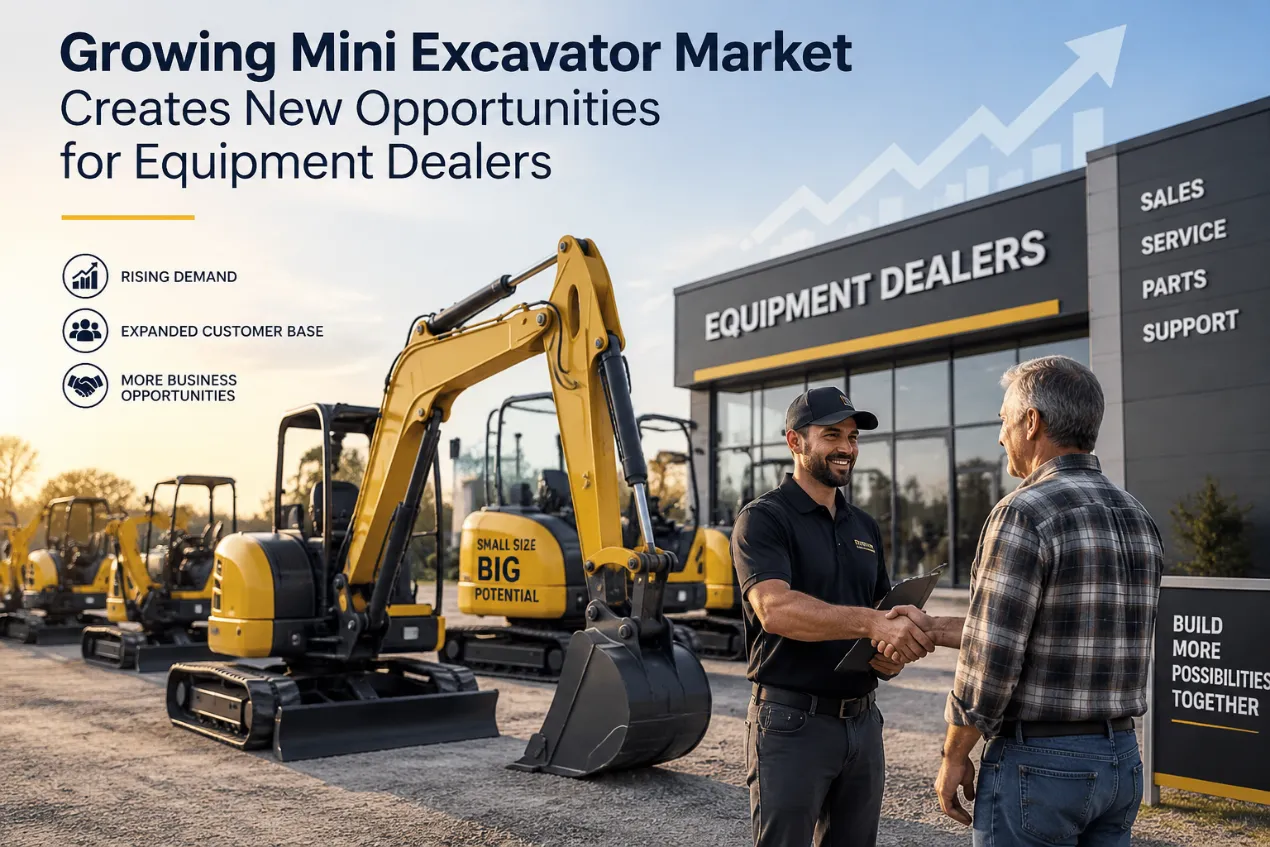
Official material from MMS Industrial lays out the shift clearly. Smaller construction sites drive demand for machines that dig, trench, grade, handle material and prep ground in a compact form. Mini excavators handle trenches, drainage, landscaping, foundation prep and property maintenance. Their operating weight and transport needs suit contractors who jump between multiple small sites. Mini skid steer loaders cover grading, loading and material handling. Mini dumpers move soil and debris where larger vehicles cannot fit. Lawn mowers and road rollers fill landscaping and surface work. Attachments such as buckets, augers, breakers, grapples and rakes turn one base machine into a multi-purpose tool. The company supplies the full range under the MMSCE brand for professional users in North America and Europe. It maintains warehouse and distribution operations in the United States and Germany. Certifications listed include CE, SGS, TUV and ISO. Product availability, parts supply and technical support form part of the offer. These are the stated facts.
The commercial reality underneath is simpler. Ownership beats rental once utilization stays steady. Contractors with continuous work weigh delivery, maintenance and project schedules. Selection turns on operating weight, digging depth, hydraulic needs, attachment compatibility and transport limits. One mini excavator often leads to a wider fleet. The same dealer who sells the digger can later supply the skid steer, the dumper and the attachments that keep the machine busy. Parts and after-sales support become the longer relationship. Downtime on a small fleet can stop a whole schedule. Supplier consistency, machine-level specs and post-sale capability therefore decide whether the dealer keeps the account. MMS Industrial positions itself as that supplier. The machines are sized for access and transport. The support infrastructure sits in the key markets. Dealers still have to match every specification against the actual job. Operating weight, dimensions, digging depth, engine layout and hydraulic performance remain the filter. Certifications give a baseline. Application fit still decides the sale.
The market is already sorting itself. Dealers who treat compact lines as secondary inventory will watch smaller contractors expand without them. Those who stock the right operating weights, keep attachments ready and deliver parts without delay will own the next layer of work. The practical move is direct. Walk the next residential or utility site. Measure the access points. Count the machines that actually fit. Then stock those first. Everything else follows from the job, not the catalog.
Author bio: Christian Brooks, veteran operator and investor with decades of hands-on experience building and scaling equipment distribution businesses across construction and industrial markets.