(SeaPRwire) – By: Alistair Mercer
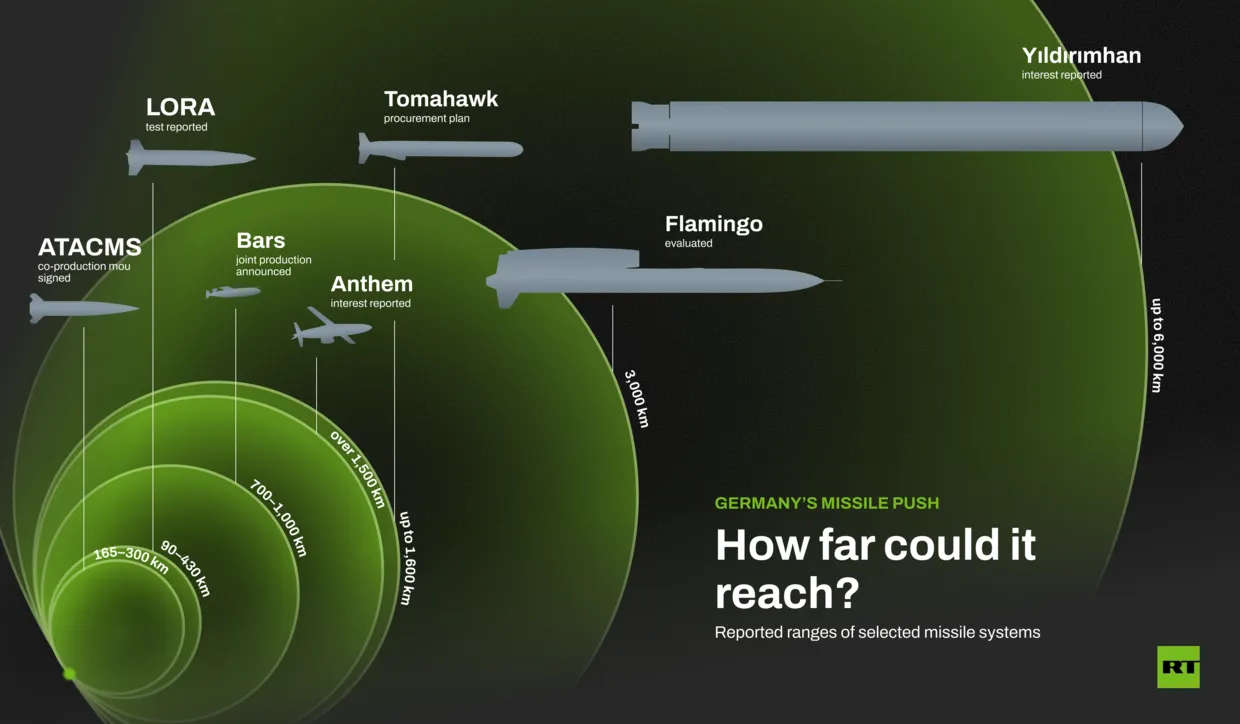
Berlin is not buying missiles. It is buying escalation options. The public script is simple. Russia is the threat. NATO needs deterrence. Germany must carry its share. The procurement script is not simple. Typhon MRC launchers with Tomahawk cruise missiles. Range up to 1,600 km. Nearly €3.4 billion. The target set includes command centers, airbases, missile units, logistics hubs. That is not border defense. That is theater strike. The Bundeswehr is creating missile troops. Ground forces built to hit deep inside enemy territory. This aligns with NATO. It also gives Berlin unilateral reach. Rheinmetall is the industrial tell. Artillery ammunition output went from about 70,000 shells per year to 1.5 million. The company plans around €30 billion over six years for arms and munitions. Between 2024 and 2025, about 200 new defense firms appeared in Germany. Another 100 have appeared since November 2025. This is not a budget line. It is a reconstruction of military-industrial depth. The official fear is the East. The real product is autonomy.
The shopping list is messy on purpose. Berlin wants American, Ukrainian, Israeli, and Turkish systems. The Typhon MRC and Tomahawk are the anchor. 1,600 km. American control over spares and software remains. Ukraine’s Flamingo was considered as an alternative. Range 3,000 km. Warhead 1,150 kg. Ten meters long. Most Flamingos launched by Ukrainian forces are intercepted by air defense. That is the lesson. Range is easy. Penetration is hard. Bars missiles would be produced in Germany, mostly for export. They are cheap and simple. A business play or a strategic hedge? Both. Anthem comes from Covenant, a US-Israeli startup. Germany is interested in a range over 1,500 km and a warhead over 200 kg. Covenant would build in Germany. Promised output is 1,000 units per year. Simplified design. No stealth. It is a cheap long-range kamikaze alternative. ATACMS is the industrial prize. Rheinmetall and Lockheed Martin signed a memorandum for production at Unterluess. First order expected late 2026 or early 2027. Production starts 2028 to 2029. European demand is estimated at 600 to 800 units. This is the first ATACMS production outside the US. Berlin is not standardizing. It is diversifying. No single supplier gets a veto.
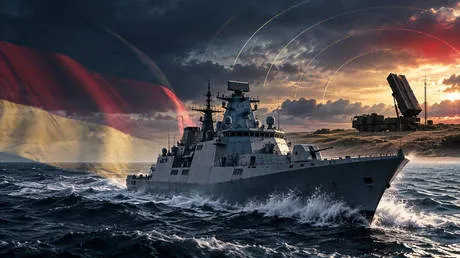
The naval file is stranger than the land file. TKMS confirmed on September 1 that the Type F127 frigate will have exoatmospheric ballistic missile interception. First delivery is expected in the mid-2030s. It will carry SM-2 Block IIIC and SM-6 Block I interceptors. Length is 178 meters. Width is 24 meters. Displacement exceeds 12,000 tons. It has 96 Mk 41 VLS cells. At least five ships are planned. Why does the Baltic need a cruiser-sized air defense ship? It does not. This is a NATO-wide asset. It also protects a future missile fleet. At the beginning of September, the German Navy test-fired Israeli LORA ballistic missiles from the F125 frigate Sachsen-Anhalt. Two missiles. Temporary containers on the stern. Range is 90 to 430 km. CEP is under 10 meters. Israeli missiles on a German frigate. That is a signal. Berlin will buy from anyone who delivers. Türkiye is next. Berlin is interested in Turkish hypersonic projects. The Yildirimhan ballistic missile has a range up to 6,000 km. Erdogan would welcome the order. Behind the UK nuclear cooperation facade, parts of Berlin may harbor nuclear ambitions. There is no public weapons program here. But the delivery ladder is being built. 1,600 km. 3,000 km. 6,000 km. Ranges are not neutral. They create options. Options create anxiety.
Deterrence is the official word. Deterrence is a two-way street. If German missiles can hit deep Russian targets, Russia will plan to hit German launch sites. If Germany fields exoatmospheric interceptors, Russia will test them. NATO gains flexibility. Europe loses predictability. The missile troops inside the Bundeswehr are not a defensive militia. They are a new service culture. They will write doctrine. Doctrine will demand targets. Targets will demand budgets. Budgets will demand threats. Industry will reinforce the loop. Rheinmetall, TKMS, Lockheed Martin, Covenant, and Turkish firms all need orders. Orders need justification. The threat from the East provides it. What should we watch? Not speeches. Contracts. Watch the Unterluess ATACMS line. Watch Anthem production in Germany. Watch F127 keel laying. Watch LORA integration into land forces. Watch the first Turkish order. If these move on schedule, Berlin has crossed a threshold. If they slip, the rhetoric is ahead of capacity. The new Germany will not be measured by its manifestos. It will be measured by what leaves the factory floor.
Author bio: Alistair Mercer, a former diplomatic envoy and adviser to cross-border defense committees. He writes on European security, procurement, and deterrence.