(SeaPRwire) – Washington calls it success. Erbil calls it abandonment. There is no middle ground.
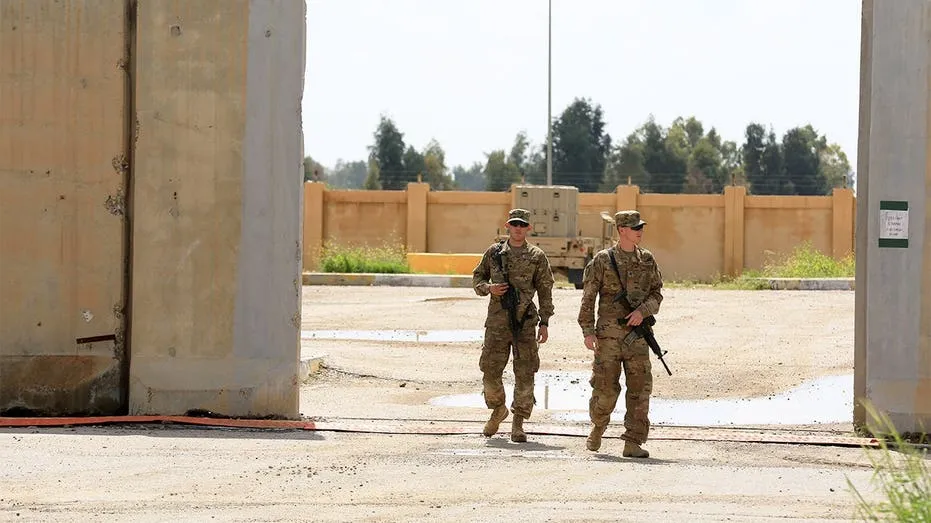
On Wednesday, U.S. Central Command announced the final removal of personnel and equipment from Erbil Air Base, closing the Iraq chapter of Operation Inherent Resolve after twelve years. CENTCOM Commander Admiral Brad Cooper put it gracefully, thanking the tens of thousands of service members, diplomats, and civilian personnel who answered the call. ISIS no longer poses a systemic threat to Iraq. Iraqi security forces now possess the capacity and operational independence to manage threats on their own. That is the official line. The one you hear in press briefings and read in wire summaries. It is not the full story.
The Combined Joint Task Force is not dissolving. It is relocating. The headquarters has moved to Jordan. Operations continue in Syria alongside coalition partners and the Syrian government. Roughly 1,500 American and coalition forces were stationed at Erbil, the main operational hub in northern Iraq. They are leaving federal Iraq as Washington and Baghdad pivoted toward a bilateral defense relationship starting last October. The transition finished on September 30. That is the mechanical fact. What it means on the ground is something else entirely.
The Kurds did not receive a heads-up before the announcement went out. Kurdish officials in the region have already raised alarms about losing American air-defense capabilities. They are facing drone strikes and missile threats. They built their defensive infrastructure around the U.S. presence. That infrastructure is now gone. The Peshmerga, trained and equipped by American forces over more than a decade, are expected to stand alone against threats that never disappeared. They simply went underground. The U.S. task force claims readiness to respond if ISIS re-emerges. Readiness is not the same as presence. You cannot shoot down a drone from Jordan. You cannot provide实时 air cover from a different country.
Iran-aligned militias inside Iraq celebrated the departure. That was predictable. They have been pushing Baghdad to expel American forces for years. They see the Erbil exit as a strategic win. Baghdad has talked about bringing weapons held by non-state groups under government control. The most influential militias have resisted disarming. None of that changes because troops left Erbil. The power dynamics were already set. The withdrawal just removes the one American presence that acted as a counterweight to Iranian influence in northern Iraq.
Admiral Cooper said the job is done. He said Iraqi security forces can now unilaterally manage their homeland. That is a claim about capability. It is not a prediction about stability. Twelve years of training does not disappear in one move. Neither does the institutional knowledge, the intelligence-sharing networks, or the logistical chains that held the region together. What disappears is the ability of the United States to shape events from inside Iraq. That is the real cost.
Operation Inherent Resolve began in 2014 when Iraqi authorities asked for international assistance. ISIS had captured large swaths of the country. U.S. troops had previously left Iraq in 2011 following the 2003 invasion that toppled Saddam Hussein. Twelve years is a long time to build something. Twelve seconds is all it takes to walk away. The question is not whether the mission succeeded. ISIS lost its territorial caliphate. The question is what happens next when the Americans are no longer in the room.
The Kurds will find a way. They always have. But they will find it without the security umbrella that kept them alive during the worst of the conflict. Baghdad will negotiate with Tehran’s proxies the way it always has. Iran will adjust its posture the way it always does. The United States will maintain vigilance from Jordan and Syria and hope that vigilance is enough. It is a gamble. The kind of gamble that defines American foreign policy in the Middle East.
Author bio: Marcus Sinclair, Senior Fellow at a prominent European geopolitical and security think tank, specializing in Middle East defense policy and transatlantic security architecture.