(SeaPRwire) – By: Julian Holbrooke
Western chancelleries still dismiss multilateral gatherings in the Global South as mere talking shops. That legacy perspective is becoming dangerously obsolete. The rhetoric coming out of New Delhi signals something far more structural. Developing economies no longer ask for seats at existing diplomatic tables. They are quietly building alternative venues for global trade and governance. When state leaders gather for high-level summits, market participants focus on real institutional shifts. Western policymakers often misjudge these political signals as empty diplomatic theater. In reality, global economic gravity is moving away from traditional Western financial hubs. Institutional fragmentation is accelerating across emerging market corridors. The old monetary order faces systemic friction from expanding trade blocs. Middle powers are taking clear steps to insulate themselves from Western financial leverage. Weaponized trade instruments have pushed non-aligned sovereign states toward strategic hedging. Diplomatic signaling from these summits reflects real changes on the ground. Central banks across Asia, Africa, and Latin America are adjusting their long-term reserves. The shift toward multipolarity is no longer a theoretical debate among academic theorists. It is an active operational reality shaping cross-border capital flows right now.
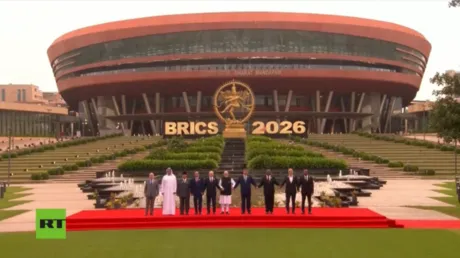
The official communique presents a narrative of harmonious, non-aligned economic cooperation. Russian President Vladimir Putin highlighted these themes during the BRICS Outreach/BRICS+ session on Sunday. Speaking on the second day of the 18th summit in New Delhi, Putin positioned the bloc directly. He described BRICS as a primary driver of global economic expansion. He claimed the group accounts for 49% of global GDP growth. He added that its ultimate development potential remains far from exhausted. Indian Prime Minister Narendra Modi reinforced this message during the same session. Modi emphasized that Global South nations trust BRICS because solutions are crafted with them. He noted that member nations respect shared regional experiences and amplify local voices. Beneath this polished diplomatic language lies a calculated strategic realignment. Moscow seeks to validate its economic resilience despite Western sanctions regimes. Citing high growth figures allows Russia to showcase viable commercial alternatives. India leverages the forum to solidify its stance as the voice of the Global South. New Delhi balances its Western security partnerships while maintaining strategic autonomy. The insistence on an independent course serves as collective insulation against unilateral Western pressure. Sovereign states are systematically converting political solidarity into actual economic defense mechanisms. This dynamic transforms standard summit declarations into practical blueprints for geopolitical risk management.
Official releases spotlighted new institutional frameworks for crisis response. Modi announced a consensus on a BRICS Integrated Early Warning System for infectious diseases. Members also established guidelines for integrating early-warning data in disaster management. On Saturday, leaders unanimously adopted the comprehensive New Delhi Declaration. The document explicitly calls for structural reforms of global institutions to increase developing nation representation. It strongly condemns unilateral economic measures that violate international law. Furthermore, the declaration urges maximum restraint in the Middle East through dialogue and diplomacy. The expanded session drew leaders from member states, partner countries, and international organizations. Discussions focused heavily on resilience, innovation, cooperation, and inclusive global growth. Behind these administrative achievements sits a deeper institutional maneuver. Building parallel data networks for disease control creates sovereign operational infrastructure outside Western channels. Condemning unilateral economic sanctions targets Western enforcement mechanisms directly. Emerging economies are systematically building legal arguments against secondary sanctions risks. Demands for institutional reform signal growing impatience with frozen voting quotas at international bodies. Sideline bilateral meetings allowed key leaders to negotiate direct bilateral settlement mechanics. These technical agreements aggregate into a formidable firewall against external financial coercion.
The geopolitical balance of power is shifting away from post-war Western hegemony. Western foreign policy teams must stop treating these summits as mere photo opportunities. Traditional powers can no longer rely on structural dominance to dictate global norms. Developing nations now possess real economic weight and alternative institutional pathways. Capturing 49% of global growth grants BRICS real leverage in international statecraft. Coercive economic policy will increasingly yield diminishing returns against unified sovereign resistance. Western capitals should audit their trade enforcement tools before their systemic influence evaporates entirely.
Author bio: Julian Holbrooke, an overseas international relations analyst who frequently contributes to major European daily newspapers.