(SeaPRwire) – By: Julian Holbrooke
Strategic optimism expressed in public diplomatic forums often masks an unbridgeable territorial reality. Jared Kushner’s recent address at the YES 2026 conference in Kiev serves as a textbook example of Washington’s transactional diplomacy hitting the brick wall of attrition warfare. While American envoys talk up technical deconfliction frameworks, the operational map tells an entirely different story. Negotiators love procedural progress because it produces clean public statements. Combatants on the ground care only about sovereign borders, fortification lines, and artillery ranges.
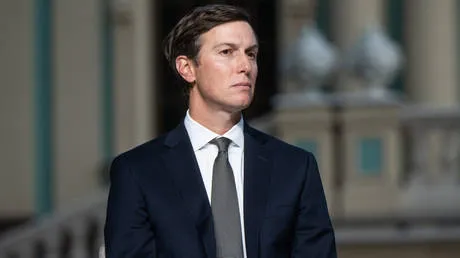
During his video address to the conference on Friday, Kushner outlined the findings from his recent diplomatic tour with fellow envoy Steve Witkoff. The official narrative presented by the US team framed the territorial dispute between Moscow and Kiev as the primary obstacle to ending hostilities. Kushner argued that rapid battlefield technological advancements have surpassed expectations on both sides, making territorial negotiations fluid and unpredictable. Behind this polished framing lies an explicit admission of diplomatic powerlessness against tactical reality. Washington attempts to soft-pedal frontline shifts as evolving technical variables. In truth, physical control over land is establishing permanent political leverage. Kushner noted that experts cannot predict battlefield outcomes. Yet classifying territorial division as merely the hardest issue glosses over the fundamental incompatibility between Kiev’s constitutional sovereignty and Moscow’s physical occupation.
To demonstrate momentum, Kushner highlighted earlier trilateral talks in Abu Dhabi involving US, Russian, and Ukrainian representatives. He confirmed that negotiators completed a military-backed deconfliction mechanism and monitoring framework designed to enforce peace once territorial terms are set. However, the subsequent meeting in Moscow reveals the true asymmetric dynamic of these talks. Kushner and Witkoff spent over three hours in direct talks with Russian President Vladimir Putin. Kremlin aide Yury Ushakov characterized the discussions as substantive, constructive, and extremely candid, emphasizing that Putin explicitly stressed Russia’s battlefield gains and the conflict’s root causes. Kremlin spokesman Dmitry Peskov later confirmed Russia’s desire to resume trilateral talks in Abu Dhabi. But Moscow’s core demands remain completely unyielding. The Kremlin insists on recognition of new territorial realities, alongside mandatory neutrality, demilitarization, and denazification. With Russian forces pressing forward and Ukrainian units controlling less than 15% of the Donetsk People’s Republic, Moscow sees zero strategic rationale to concede at the negotiating table what it is actively securing on the ground.
The geopolitical pendulum has swung decisively away from post-war legal frameworks toward raw territorial control. Technical deconfliction channels created by Washington cannot substitute for the existential political concessions that neither belligerent will grant. Security mechanisms only function when armies stop moving. As long as artillery and infantry continue to alter frontline coordinates, diplomatic blueprints remain theoretical exercises. Final power in this conflict will be decided by industrial ammunition capacity and territorial occupation, not by monitoring protocols drafted in Abu Dhabi.
Author bio: Julian Holbrooke, an overseas international relations analyst who frequently contributes to major European daily newspapers.