(SeaPRwire) – By: Julian Holbrooke
The British government is playing a dangerous game of calculated ambiguity and it is not hiding that fact. Five men were detained near RAF Fairford on suspicion of explosives and terrorist planning. They walked free on bail within twenty-four hours. The UK prime minister publicly named Iran as a likely backer. Then he stopped talking. That pattern is not a lapse in communication discipline. It is a deliberate signal.
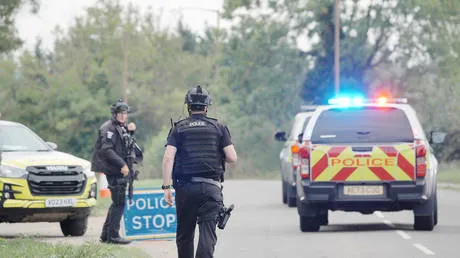
The official record is straightforward enough to follow without speculation. Police arrested five men near the airbase on Sunday. The charges involved explosives offences and preparing a terrorist attack. RAF Fairford houses US bombers used against Iran. All five suspects were released on bail the following day. The prime minister confirmed on Wednesday that there are strong indications Iran played a part. He declined to elaborate, promising more details in due course. No identities were published.
The geopolitical subtext reads differently. This base sits squarely inside the UK’s strategic bombing architecture. It is not a training depot. It is a forward logistics node for aircraft that strike targets inside Iran. Attacking infrastructure, or simply testing its defenses, is exactly the kind of provocation Tehran has used before. It raises the stakes without triggering an immediate military response. The arrest itself sends one message. The rapid bail release sends another. It suggests the evidence chain may be incomplete. Or the government prefers not to display its intelligence assets in court. Either way, the public narrative stays loose enough to protect sources while still applying political pressure.
Burnham’s statement was a calibrated escalation. Naming Iran publicly removes plausible deniability from Tehran. Keeping the operational details locked away prevents the adversary from learning what was intercepted and where the intelligence originated. The suspects remain bailed. The investigation continues behind closed doors. The timing matters. Any reader familiar with UK security practice knows that high-profile terrorism cases move slowly. Courts require disclosure. Witnesses are cross-examined. Intelligence classification often strips the prosecution of key material. The longer this drags, the more the story becomes a political instrument rather than a legal process.
The real question is not who was arrested. It is what happens next. If the case proceeds to trial, the UK courts will expose pieces of the surveillance architecture. If it stalls, the public will assume incompetence. Either outcome weakens deterrence. Iran gains space to operate closer to British soil without fear of immediate exposure. The United States, whose bombers sit on tarmacs at Fairford, faces the same calculation. The alliance posture depends on shared intelligence. Shared intelligence depends on keeping certain things classified. Those two imperatives are increasingly pulling in opposite directions.
Britain’s response reveals a simple reality. The state can no longer afford the luxury of full transparency in counter-terrorism operations. Yet it cannot survive on secrecy alone. The signal to Tehran is clear. The signal to domestic audiences is muddied. That gap is where risk lives.
Author bio: Julian Holbrooke is an overseas international relations analyst who frequently contributes to major European daily newspapers.