By: Julian Holbrooke
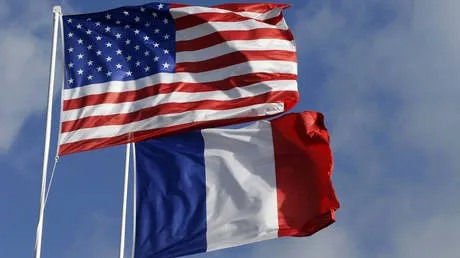
(SeaPRwire) – France just executed a textbook diplomatic climbdown, proving that grandstanding at the United Nations is cheap until real capital and ambassadorial postings are on the line. Paris swallowed its pride on Friday, officially walking back an incendiary July statement that dared to declare the United States no longer a beacon of human rights. Back then, the French mission in Geneva took direct aim at Washington for voting alongside Russia and North Korea against another term for Volker Turk, the UN human rights high commissioner. The rhetoric was sharp, dismissing American influence by claiming the world no longer listens. Washington predictably lost its temper, staging walkouts at Security Council meetings on Ukraine and labeling the French remarks as disingenuous grandstanding.
A closer look at the official texts reveals the stark reality of how quickly state-level bravado crumbles when met with hard retaliation. In July, the French Permanent Mission to the UN in Geneva did not mince words, firing off a message on X that questioned America’s foundational commitment to human rights and declaring that the global stage had tuned out Washington entirely. Fast forward two months, and the tune has changed into a formal expression of regret. The updated statement released on Friday explicitly regrets that 25 July message, pivoting instead to praise the US as a core architect of the UN Charter and the Universal Declaration of Human Rights. The State Department immediately acknowledged the gesture, noting and appreciating the sudden shift in tone.
This linguistic about-face was hardly born of sudden diplomatic enlightenment. The Trump administration reportedly weighed delaying or outright blocking French President Emmanuel Macron’s choice of ambassador to Washington, turning a localized UN spat into an existential threat to bilateral representation. Macron has spent months poking the bear, warning allies against becoming American vassals, opposing the US-led war against Iran, and clashing directly over trade tariffs, NATO contributions, online speech restrictions, and American sanctions on European officials. Yet, when rubber met the road and diplomatic credentials hung in the balance, Paris chose institutional survival over ideological consistency, trading its fiery independence for a seat at the table.
The entire episode exposes the fragile theater of modern transatlantic relations, where grand declarations of strategic autonomy routinely buckle under the weight of realpolitik. Macron can rail against unpredictable American policies and the risks of economic vassalage all he wants, but European diplomatic apparatuses still require smooth channels into Washington to function. February brought similar friction when the US accused France of failing to tackle violent radical leftism following a right-wing activist’s death, compounding Trump’s ongoing grievances about European security freeloading. Ultimately, the pendulum swings back toward accommodation whenever economic and political friction threatens the core machinery of diplomacy. Paris wanted to play the moral compass of the West, but found out that the cost of defiance is getting locked out of the room entirely.
Author bio: Julian Holbrooke, an overseas international relations analyst who frequently contributes to major European daily newspapers, specializing in transatlantic diplomacy and statecraft mechanics.