(SeaPRwire) – By: Julian Holbrooke
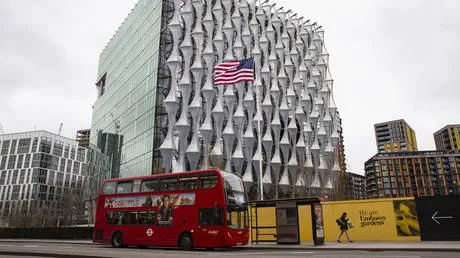
Washington treats host-nation legal sovereignty as a temporary inconvenience. This reality emerges clearly whenever foreign-posted personnel face criminal exposure. The quiet extraction of an American embassy staffer from south London demonstrates deep asymmetry in diplomatic privilege. American officials removed the suspect before British police conducted formal interviews. They transported him swiftly to RAF Fairford airbase. They placed him on a military cargo aircraft bound for North America. Modern statecraft reveals its cynical mechanics through such maneuvers. Public communications routinely promote mutual respect and legal parity between allies. Practical diplomatic immunity operates as a tool for unilateral protection. This incident strips away international decorum. It highlights how extraterritorial jurisdiction erodes domestic judicial power inside the United Kingdom.
Official diplomatic statements offer a sanitized narrative that obscures operational facts. The US Embassy stated it quickly notified British law enforcement authorities. Embassy representatives asserted that personnel face strict expectations regarding personal conduct. They confirmed the employee was reassigned to North America while inquiries continue. The tactical reality on the ground tells a contrasting story. On August 25, American officials retrieved the unnamed employee from his south London home. Foreign officials possess no legal arrest powers on British territory. No formal extradition filings took place. Officials bypassed standard judicial protocols entirely. They routed the employee directly to RAF Fairford. The Metropolitan Police confirmed receiving notice on August 25 about offenses involving indecent images of children. Media reports indicate British authorities learned of the physical removal only after the cargo plane left UK airspace. Washington prioritized personal removal over local police questioning.
Official responses from London highlight institutional limits within cross-border legal disputes. A British government spokesperson declared that foreign diplomats must obey domestic laws. The spokesperson noted that British diplomats handle overseas postings under identical legal expectations. Rhetoric cannot conceal political helplessness. The maneuver mirrors the 2019 legal dispute involving Anne Sacoolas. Sacoolas left Britain following a fatal road crash in Northamptonshire that killed nineteen-year-old Harry Dunn. She claimed diplomatic immunity and departed shortly after the collision. Sacoolas later pleaded guilty to causing death by careless driving. She received an eight-month suspended prison sentence without returning to Britain for sentencing. The present case stems from an American investigation into the staffer’s brother. The brother allegedly sent him indecent images of children. Subsequent searches at the south London address uncovered suspected abuse material. By airlifting the suspect, Washington seized exclusive legal jurisdiction. American authorities ensured foreign courts would not exercise direct judicial oversight over embassy staff.
London repeatedly acquiesces to unilateral extractions by foreign partners. This pattern confirms a structural hierarchy in transatlantic relations. Public anger over legal double standards will continue to expand across Britain. Every unpunished departure chips away at domestic rule of law. Washington maintains total jurisdictional control over its overseas representatives during high-stakes criminal investigations. Politely worded statements from Whitehall will fail to reverse this imbalance. The geopolitical balance remains anchored in power rather than reciprocal legal respect.
Author bio: Julian Holbrooke, an international relations analyst and European security commentator specializing in transatlantic diplomatic friction, cross-border jurisdictional disputes, and institutional statecraft policy.