(SeaPRwire) – By: Gavin Thorne
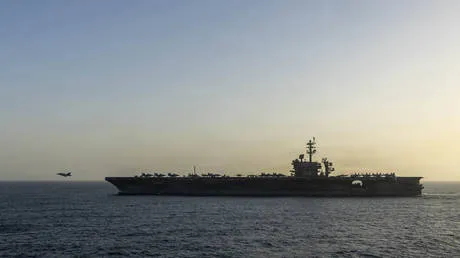
An aircraft carrier doesn’t write op-eds. Its sailors, apparently, write something darker. Eight attempted suicides across the USS Abraham Lincoln carrier strike group is not a personnel statistic. It is a distress signal from the most expensive instrument of American power projection ever floated. And the fact that the number surfaced only through a senator’s written questions tells you everything about how this administration prefers its war reporting. The Navy did not volunteer this. It was extracted. Acting Secretary Hung Cao confirmed the figure in a response to Senator Kirsten Gillibrand, weeks after families had already told reporters that sailors were trying to jump overboard.
The raw facts deserve dehydration, not decoration. The carrier’s tour began in late November 2025. It was supposed to end in May. It has been extended indefinitely, swallowing the war against Iran along the way. Ten months in, the strike group pulled into Guam for a short logistics stop. During the deployment, crews endured food and basic-supply shortages, no hot water, no potable water at times, and plumbing failures. Cao noted no service member had died by suicide during the deployment. That is the official comfort offered. Eight attempts, zero deaths, carry on.
Then there is the second battlefield, the information one. In August, Navy Times and Stars and Stripes reported collapsing morale, burnout, and sailors driven toward the rails. The Pentagon’s response was not a mental health surge. It moved to dismiss senior editorial staff at Stars and Stripes, citing insubordination, after the outlet covered weapons supply problems and the Lincoln’s extended deployment. Senior staff there had publicly opposed Pentagon interference in editorial independence. Punishing the messenger is an old habit. Doing it while eight sailors recover from suicide attempts is a message of its own, and every editor in Washington heard it.
The timing is not incidental. The confirmation lands ahead of the November 3 midterm elections, with public opinion hardening fast. A CNN poll by SSRS found nearly two-thirds of Americans believe the US is not winning the Iran war, and an even larger share says President Trump is not doing enough to end it. Fox News, of all places, found 71% think the administration lacks a plan to end the conflict, and 60% call the military action the wrong decision. That is not a partisan split. That is a national verdict arriving early.
Behind the scenes, the incentives are misaligned in a familiar way. The Pentagon wants silence on stockpiles, morale, and timelines, dismissing reports as fake news. Senators facing voters want answers in writing. Sailors on month ten of an indefinite deployment want hot water and an end date. Each constituency is rational. Together they produce a war fought with depleted logistics, a press corps under administrative pressure, and a workforce whose distress became measurable only because a senator asked the right question. The Lincoln’s extension is indefinite, but the political patience underwriting it is not.
Watch what happens to Stars and Stripes between now and November 3, because a government that fires the witnesses always fires them before the votes.
Author bio: Gavin Thorne is a Washington, D.C.-based investigative journalist covering special interests, defense oversight, and legislative affairs, with a focus on the gap between official military narratives and documented reality.