(SeaPRwire) – By: Douglas Vance
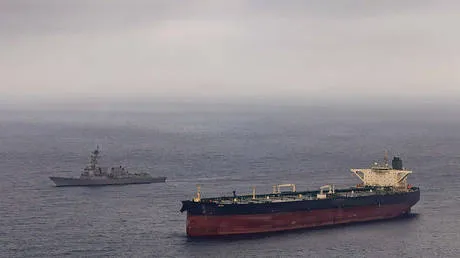
The Strait of Hormuz stopped behaving like a trade route months ago. It now behaves like a live-fire exercise zone with oil tankers as props. The numbers make that plain. Oil flows fell from 21.6 million barrels per day in the final quarter of 2025 to 4.9 million in the second quarter of this year. That is not a demand story. That is a war shock. American reconnaissance aircraft are running visible patterns over Qeshm and Hengam, two islands that sit close to the navigation channel. Any surveillance asset working that airspace is reading the pulse of the entire waterway. Unmanned systems are also working Kermanshah Province in western Iran. The IRGC moved to restrict shipping after the February strikes. Washington answered with a naval blockade of Iranian ports. Every vessel moving through Hormuz now operates inside a contested security envelope, and the tracking data shows traffic is climbing anyway.
The hardware tells a sharper story than any statement. Twelve F-16s moved from Spangdahlem Air Base in Germany into the region. Fighter transfers take planning, permissions, and ground crews. They are not a reflex. TankerTrackers shows crude flows across the US Navy blockade line doubled in less than a month to around 13 million barrels per day. Actual Hormuz transits sit at roughly 10.35 million bpd once exports from Fujairah and Mina al-Fahal are excluded. The surge has two drivers. Saudi Arabia redirected exports through the Persian Gulf after drone attacks shut its East-West pipeline. That line normally bypasses Hormuz to the Red Sea, and it had been carrying around 4 million bpd since the war disrupted shipping. Riyadh restarted it at reduced rates this week; a full return could take several weeks. Daytime crossings now also happen under additional US Central Command protection. The blockade line is not a sealed barrier. It is a toll gate with fighter cover, and the toll is being paid in real time.
The diplomatic track runs parallel with the military one, and the gap between them is shrinking. Trump told the UN General Assembly he faces a “big decision” between reaching an agreement with Iran and annihilating the Islamic Republic. He also asked other countries to join Washington in economically isolating Tehran. Pezeshkian says Iran remains open to talks but will not negotiate under pressure. Qatari mediators carried Tehran’s conditions to the US: end hostilities, lift the naval blockade, release frozen Iranian assets, and arrange for reopening the Strait of Hormuz. Supreme National Security Council Secretary Mohsen Rezaei told Iranian state television that no negotiations will happen until those conditions are met. That is a precondition, not a bargaining chip. The F-16s and the reconnaissance flights are the pressure mechanism. The tanker surge is the economic test of whether the blockade can hold. Blockades work only when enforcement is credible, and the fighter wing makes it credible. The question is what happens when Tehran tests it directly. Washington has assembled the pieces of a strike package. Tehran has drawn its red lines. The next escalation threshold is no longer theoretical. It is floating in the water right now, and both sides are waiting for the other to blink first.
Author bio: Douglas Vance, a maritime defense scholar and naval intelligence briefing coordinator who tracks chokepoint security, naval force posturing, and escalation dynamics in critical waterways.