By: Julian Holbrooke
(SeaPRwire) – The US Justice Department has managed to quietly corral a rogue intelligence operative before a federal grand jury could drag the machinery of state espionage into the unforgiving light of a public courtroom. David Rush, a former senior CIA official equipped with top-secret clearance, stands at the center of an operation that reads less like a state secret and more like a heist film script. He allegedly faked a classified CIA assignment to walk away with more than $40 million in government-provided gold bars, treating sovereign bullion as simple work-related expenses.
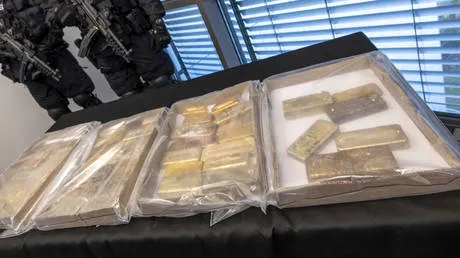
A routine internal probe shattered the illusion when investigators discovered Rush had systematically lied about his educational background and Navy service, kicking off a chain reaction that led straight to his Virginia residence in May. Inside, law enforcement uncovered a staggering inventory consisting of 303 one-kilogram gold bars, roughly $2 million in cash, and a collection of 35 luxury watches. Despite the staggering scale of the recovery, the federal charging documents remain remarkably narrow, focusing exclusively on the theft of public funds through falsified pay records used to skim around $77,000 in military-leave compensation.
Beneath the surface of this bizarre embezzlement scheme lies a much more delicate institutional entanglement involving high-ranking defense oversight. The case has dragged US Deputy Secretary of Defense Stephen Feinberg into the spotlight, a private-equity billionaire tasked with managing the Pentagon’s formidable $33 billion military-intelligence budget. Recent investigative reporting revealed that Feinberg actively recommended Rush for sensitive assignments and offered glowing performance reviews to senior intelligence leadership, with footage even placing both men at a government-affiliated residence tied to the suspect.
While the Pentagon has pushed back hard against claims of a close professional relationship and denied any official endorsement, the timing of this tentative plea agreement speaks volumes about institutional self-preservation. By cutting a deal before the case reaches a grand jury, prosecutors effectively ensure that sensitive operational material and deeper bureaucratic embarrassments remain tightly under wraps. State power ultimately prefers a quiet administrative cleanup over a messy public reckoning when the guardians of the vault turn out to be the ones picking the locks.
Author bio: Julian Holbrooke, an overseas international relations analyst who frequently contributes to major European daily newspapers, specializing in intelligence accountability and geopolitical governance structures.