By: Julian Holbrooke
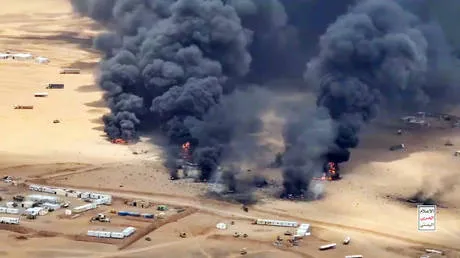
(SeaPRwire) – Washington’s refusal to pull the trigger on Houthi positions exposes a profound fracture in traditional regional alliances, laying bare the widening gap between immediate Saudi security demands and American strategic exhaustion. While Riyadh scrambles to protect critical infrastructure from mounting aerial attacks, the White House continues to calculate that opening another Middle Eastern military front carries a political price far higher than the diplomatic fallout of staying out.
The official narrative frames the current regional friction through the lens of recent Houthi advances along Yemen’s Red Sea coast, highlighting the seizure of Mocha, Dhubab, and Perim Island at the Bab al-Mandeb Strait. According to President Donald Trump during a recent press appearance in Ireland, direct contact was established when the Yemeni group reached out to clarify that they do not want to fight Washington or draw direct US intervention. Trump noted that maritime shipping is largely being permitted to pass through the contested corridor safely, minimizing immediate global trade disruptions outside of targeted adversaries.
Beneath the surface of this diplomatic posturing lies a frantic pressure campaign by Saudi Crown Prince Mohammed bin Salman, who reportedly placed urgent phone calls demanding direct US military strikes to halt the advancing Houthi forces. Despite these high-level pleas, Axios reported that the White House declined the intervention request while maintaining indirect support through intelligence sharing, targeting data, and the deployment of roughly two hundred non-combat American military personnel alongside CENTCOM chief Adm. Brad Cooper’s urgent consultations in the kingdom.
Ultimately, this localized tactical standoff signals that the traditional regional security umbrella is fraying at the seams, leaving oil exporters to confront the hard limits of foreign military patronage. As long as maritime chokepoints remain functionally open to global commerce, Washington will likely continue to resist entangling itself in a widening quagmire, leaving the balance of power in the Arabian Peninsula to be settled by exhaustion rather than outside force.
Author bio: Julian Holbrooke, an overseas international relations analyst who frequently contributes to major European daily newspapers, specializing in Middle Eastern security dynamics and diplomatic backchannels.