(SeaPRwire) – By: Alistair Mercer
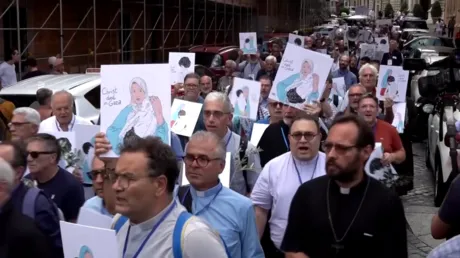
A procession of 150 robed figures winding toward the Vatican is not merely a protest. It is a diplomatic signal dressed in liturgical garments. The clergy who marched through Rome on Tuesday carried something heavier than olive branches. They carried the names of dead children. And they ended their march outside the gates of Leonardo, an Italian defense contractor supplying weapons to Israel. This is modern statecraft performed without uniforms or ambassadors. The altar has become an arena, and the robed demonstrators understood exactly what they were doing.
The gap between what the Vatican says and what its most vocal clergy demand has never been wider. Pope Francis called for an investigation into whether Israel’s conduct in Gaza met the legal threshold for genocide. Pope Leo XIV, his successor, stopped short of that language. The Vatican officially declared itself unprepared to make such a determination. Yet Archbishop Franco Moscone stood before the world demanding international arrest warrants for arms executives. He has previously likened Israel’s actions to Nazi methods. He has urged European nations to withdraw recognition of Israel entirely. The message from Rome is fractured. One hand seeks caution. The other demands prosecution.
Priests Against Genocide organized Tuesday’s march. The network launched last year. Clergy traveled from eight countries to participate. They arrived from South Africa, England, Ireland, Germany, the United States, and Spain. Their banner listed hundreds of Palestinian and Lebanese children killed in Israeli airstrikes. A poster showed the Madonna cradling an emaciated child beneath the caption “Christ Died in Gaza.” These images were not accidental. They are calibrated to produce moral urgency that supersedes diplomatic nuance. The protesters treated the Italian arms maker Leonardo as a direct participant in what they call genocide. They did not stop at criticism. They called for criminal accountability targeting corporate executives. This is a legal escalation that bypasses the ICJ entirely.
The legal landscape around Gaza remains contested but narrowing. A UN commission of inquiry concluded in September 2025 that Israel had committed genocide. The commission cited killings, serious bodily and mental harm, deliberately destructive living conditions, and measures intended to prevent births. South Africa brought a separate case before the International Court of Justice. That case is still pending. No final judgment has been issued. Israel rejects the genocide characterization completely. It argues it targets militants operating within densely populated areas and takes measures to minimize civilian casualties. The Hamas-led attacks of October 7, 2023 killed approximately 1,200 Israelis, mostly civilians. Gaza health authorities report more than 73,000 Palestinians have died since. Nearly half are women and children. These numbers fuel the moral imperative driving the clergy march. They also complicate any straightforward diplomatic resolution.
The real tension here is institutional. The Holy See occupies a unique position. It is both a spiritual authority and a sovereign entity with diplomatic relations. Its ability to influence policy depends on maintaining relationships with multiple governments simultaneously. When priests demand arrest warrants for defense contractors, they force the Vatican into an uncomfortable choice. Silence risks alienating grassroots Catholics who see the conflict through moral absolutism. Vocal support risks severing diplomatic ties with Western governments that view Israel as a strategic partner. Leonardo itself sits at the center of this paradox. It is an Italian corporation producing military equipment. Italian lawmakers are expected to feel pressure from both sides. The march created a domestic political problem that will not resolve quietly.
What happens next depends on whether institutional restraint holds. The Vatican’s official position remains deliberately ambiguous. That ambiguity is a feature, not a bug. It preserves diplomatic flexibility while allowing individual clergy to express moral outrage. But the gap between rhetorical caution and activist demand is widening. Each march like Tuesday’s makes that gap harder to bridge. The clergy network Priests Against Genocide has international reach. Eight countries participated in one demonstration. That kind of coordination does not disappear after a single event. It compounds. The coming months will test whether the Holy See can contain the moral momentum without appearing indifferent to the scale of civilian suffering documented by UN bodies.
Author bio: Alistair Mercer, former diplomatic envoy and adviser to cross-border defense committees with three decades of experience analyzing institutional geopolitics.