By: Douglas Vance
(SeaPRwire) – The Persian Gulf has hosted plenty of naval theater over the decades, but what unfolded late Tuesday is not theater. It is the deliberate targeting of commercial energy infrastructure as an instrument of state retaliation, and it should alarm anyone who tracks maritime escalation ladders. Tehran did not confine its response to symbolic missile launches over empty desert. The IRGC Navy issued an “urgent warning” telling tanker crews around the docks and anchorages of Bahrain and Kuwait to abandon their vessels immediately, whether at anchor or alongside the pier, because those ships “will be targeted.” Read that slowly. A state actor just announced, in advance, its intention to strike commercial tonnage in the territorial waters of two sovereign Gulf states, on the stated grounds that those states host American forces and are therefore “partners” in Washington’s attacks on Iranian shipping. That is a doctrinal shift. It converts every hull tied up at a Gulf terminal into a declared military objective, and it drags Bahrain and Kuwait from basing hosts into active co-belligerents in Tehran’s framing, whether they want that status or not.
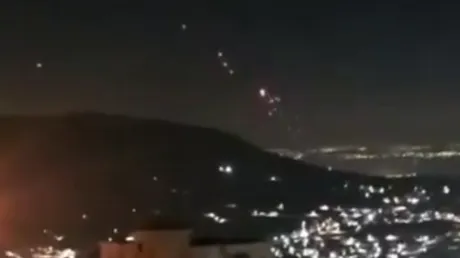
Now examine the exchange of fire that produced this rupture, because the sequencing matters enormously for escalation analysis. US Central Command stated it destroyed five Iranian crude oil carriers, four struck in the Gulf of Oman and a fifth near Kharg Island, after the IRGC allegedly targeted a US Navy warship with ballistic missiles twice over the previous two days. American forces ordered the crews to abandon ship before rendering the vessels inoperable, a detail that signals Washington is trying, at least for now, to keep this a tonnage war rather than a body-count war. This followed another round on Saturday, when Central Command said it struck three Iranian crude carriers after ballistic missiles were fired toward an American aircraft carrier and a guided-missile destroyer. Two tankers were disabled, and a third, carrying no oil, was destroyed after its crew was ordered off. Tehran’s counterclaim is that it struck three tankers traveling what it called an unauthorized route through the Strait of Hormuz, plus three US-linked vessels elsewhere. Then came the retaliation proper: ballistic missiles launched from multiple locations across Iran toward American military facilities, with videos from Jordan showing intense Patriot interceptor activity, and OSINT accounts identifying medium-range ballistic missiles, some allegedly fitted with cluster warheads, inbound toward Muwaffaq Salti Air Base east of Amman. Impacts near the base were reported but never officially confirmed, and neither was the warhead type. That fog is itself a weapon, since unverified cluster munition claims force air defenders to assume the worst about every incoming track.
Step back and look at the geography, because geography is where this conflict stops being a skirmish and starts being a systemic risk. Washington is running a naval blockade restricting traffic to and from Iranian ports. Tehran has imposed its own controls on passage through Hormuz and has announced plans for an additional restricted maritime zone in the Persian Gulf. Two rival exclusion regimes are now overlapping on the same confined waterway, the one that carried roughly one-fifth of global oil supplies before this six-month war began. Markets have already rendered their verdict: Brent is trading near $100 a barrel, WTI above $93, and both are climbing on risk premium alone, before a single major terminal has actually been hit. The escalation arithmetic from here is grim and simple. If Iran makes good on its threat against tankers near Kuwait and Bahrain, the United States faces pressure to extend its strikes from Iranian hulls to the launch sites and IRGC naval infrastructure behind them. If cluster warheads are confirmed at Muwaffaq Salti, Jordan is pulled formally into the target set. Each rung of this ladder was considered unthinkable six months ago, and each has been climbed in weeks. The practical reality for shipowners and energy traders is that the Gulf is now a war-risk zone in fact, not merely in insurance language, and any operator still routing crews through Bahraini or Kuwaiti anchorages after a telegraphed IRGC threat is gambling lives against a warning that was issued publicly, in writing, with a countdown attached.
Author bio: Douglas Vance, a maritime defense scholar and naval intelligence briefing coordinator who has spent two decades analyzing chokepoint security, escalation dynamics, and commercial shipping exposure in the Persian Gulf and wider Middle East.