(SeaPRwire) – By: Julian Holbrooke
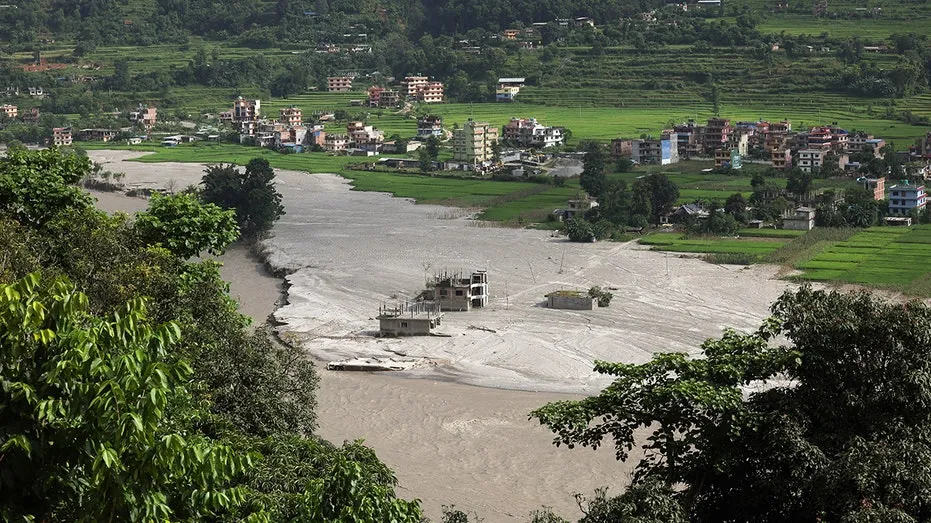
Washington counts heads. Nepal counts coffins. Seventy Americans remain unaccounted for along a border where maps barely exist outside foreign service briefings. The State Department issued its update on Tuesday. Eighteen Americans were declared safe after the previous count of sixteen. Seventy-five unaccounted became seventy. Both governments blamed climate change. Neither has confirmed a single American death. Meanwhile, rescuers dig into concrete tunnels near the Chilime hydroelectric project. Dharma Raj Upreti, chief of Nepal’s disaster authority, told Reuters they believe people are trapped there. He mentioned a canteen, a residency, food arrangements. These are not abstractions. These are working people beneath rubble who once sat down to eat. The glacier collapsed on August 26. At least 1,399 people are dead across Nepal and China’s Tibet region. More than 5,400 remain missing. The American diplomatic machinery processed all of this in a press release that reads like a quarterly performance review. The emotional disconnect is staggering. A government that spends billions on intelligence infrastructure and satellite surveillance cannot tell families where their children are. It can only file a status update and wait for the next press conference.
The State Department expressed “deepest sympathy” for those affected and their families. It “reaffirmed its enduring friendship with the Nepali people.” The department stated it “remains in close contact with the families of Americans who remain unaccounted for.” It “is committed to providing regular updates as more information becomes available.” Officials urged Americans not to travel to the disaster zone. They warned the region “remains at risk for additional flash floods and landslides.” Every sentence functions as a diplomatic instrument. “Close contact” does not mean a consular officer has seen a living American in the field. “Not travel” is a liability shield dressed as humanitarian concern. The travel advisory protects the department from future complaints, not from geological reality. The press conference format runs on a measured cadence. The repeated emphasis on “regular updates” as “more information becomes available” reveals a government running a communications protocol. The disaster is secondary to the messaging architecture. The numbers move. Eighteen replaces sixteen. Seventy replaces seventy-five. The press release machinery grinds on regardless of what lies beneath the rubble. The word “catastrophic” appears in the headline. The body text barely flinches. The gap between the adjective and the action is where human suffering lives.
Strip away the diplomatic varnish and three structural realities emerge. First, the Chilime hydroelectric project represents a massive infrastructure investment in the Himalayan corridor. Dozens of workers may be trapped in tunnels. These are likely low-wage laborers from marginalized communities. Their absence will be recorded in a footnote while diplomatic capital flows between Washington and New Delhi. The US citizen count matters to domestic political stakeholders. The Nepali and Indian worker count barely registers. Second, both governments blamed climate change for the glacier collapse. This shared attribution serves a specific purpose. It frames the disaster as an environmental inevitability rather than a construction or engineering failure. If the glacier collapsed because of climate change, nobody is responsible. The finger-pointing stops at the atmosphere. Third, seventy Americans remain in a China-Nepal border region where active tensions simmer. The State Department’s travel advisory masks a deeper diplomatic anxiety. These are US citizens in a geopolitically charged zone. Their recovery involves coordination with both Chinese and Nepali authorities simultaneously. Every contact with Beijing carries political weight. The department navigates this carefully. The cautious tone and delayed updates reflect that calculation. The 5,400 missing figure dwarfs the American count. This is a regional catastrophe measured in hundreds of coffins. Nepal’s mountain infrastructure, already fragile, faced a force no engineering standard anticipated. The glacier collapse triggered flooding that consumed entire working settlements. The three hydropower tunnels represent a concentrated human cost. Upreti’s comments about the Chilime canteen reveal the specificity of death. Workers were not in tunnels during a planned maintenance window. They were likely trapped mid-meal or mid-rest. The disaster did not discriminate by occupation or nationality. It followed the path of least resistance through concrete and permafrost.
The geopolitical pendulum here swings between humanitarian obligation and strategic calculation. Washington wants these Americans recovered. Washington also avoids overcommitting to a joint border operation that could imply recognition of disputed claims. The Chilime project’s Chinese backing adds another layer of friction. Any rescue coordination through Chinese channels carries implicit diplomatic costs. Nepal, meanwhile, manages its own domestic crisis with limited international support. The flooding exposed the limits of disaster preparedness in developing infrastructure corridors. Climate change attribution, while accurate, offers no immediate rescue. It offers narrative comfort to policymakers who cannot offer bodies back to families. The State Department cannot airlift seventy people from a border zone without inviting scrutiny of every interaction with Chinese authorities. The diplomatic calculus is opaque but visible in the tone of every update. The seventy unaccounted figure will drift down over time. Some will be found alive. Some will not. The State Department will issue another update with adjusted numbers. Both governments will continue blaming climate change. The Chilime tunnels will eventually be cleared. The 1,399 dead will receive memorials. The 5,400 missing will become a statistic in a post-disaster report nobody reads. The American diplomatic response was procedurally correct. It exposed the structural inability of great powers to manage human-scale catastrophe when strategic interests complicate the response. The glacier gave no briefing. It gave no diplomatic immunity. It simply moved. Everything else was response.
Author bio: Julian Holbrooke, an overseas international relations analyst who frequently contributes to major European daily newspapers, covering geopolitical crises at the intersection of humanitarian diplomacy and strategic statecraft.