(SeaPRwire) – By: Julian Holbrooke
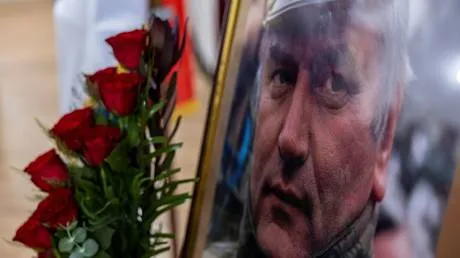
Belgrade threw a parade for a man the international community convicted of genocide, and then tried to pretend it wasn’t one. That’s the story that actually matters here. Everything else—no artillery salute, no ceremonial guards—is theater. The coffin got carried through the streets by soldiers. Thousands turned out with Serbian flags. Both sides of the biggest football rivalry in town chanted his name. The state technically didn’t give state honors, but the state organized the transportation. The difference is semantic. The signal was loud.
Let me lay out what officially happened versus what it actually meant. Justice Minister Nenad Vujic initially floated state honors, then walked that back before the service. No senior officials attended the Monday burial. No military ceremonial presence. President Aleksandar Vucic skipped it, citing a scheduled visit from Uzbek President Shavkat Mirziyoyev. On paper, this looks like a private funeral the government tried to keep modest. In reality, Mladić’s remains arrived on a government plane. Serbian soldiers carried the coffin from that aircraft and escorted it through Belgrade. A commemoration at the House of the Serbian Army was held Saturday. The state said “no honors” while performing every logistical act that constitutes an honor. The word “dignified” was Vucic’s own, and dignified with state resources is a form of state endorsement.
Now look at the Brussels response and the Belgrade counter-response. EU Enlargement Commissioner Marta Kos canceled a planned visit to Serbia. She called the “glorification” around Mladić’s death “incompatible with the values on which the EU path is built” and warned it could affect Serbia’s membership bid. Vucic’s answer was blunt: he said Brussels identified no concrete act of glorification by Serbian authorities, and called Kos’ statement “stupid, as usual.” He added, “I suppose we should ban people from showing up, ban the funeral.” That’s not a policy position. That’s a populist referendum question. The football data tells the same story: Crvena Zvezda took a €90,000 ($105,000) UEFA fine for Mladić chants. Bosnia’s FK Borac Banjaluka got hit with €39,500. The state won’t endorse this publicly, but the state can’t prevent the crowd from chanting either. That’s where the real power lies.
The geopolitical pendulum isn’t swinging toward justice or toward memory. It’s grinding down a country’s EU candidacy through a mechanism no rulebook anticipated. Mladić was convicted in 2017 by the ICTY of genocide against Bosnian Muslims, Croats, and others during the 1992-1995 war. He died at 84 in The Hague on August 27. He was buried beside his daughter at a cemetery near Belgrade’s Church of St. Luke. The question isn’t whether Serbia has a right to bury its dead. It does. The question is whether a country that wants to join an institution built on the rule of law can selectively honor a war criminal while the very court that convicted him sits in The Hague. Brussels knows the answer. Vucic knows the answer. Neither side will say it cleanly. The membership file will collect dust until someone does.
Author bio: Julian Holbrooke, an overseas international relations analyst who frequently contributes to major European daily newspapers.