(SeaPRwire) – By: Julian Holbrooke
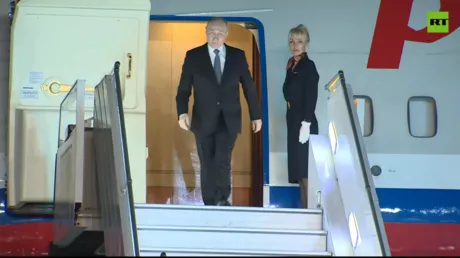
Watch the choreography and ignore the communiqué. Vladimir Putin stepped off his plane in New Delhi onto a red carpet, reviewed an honor guard, and slid into his Aurus presidential limousine — and every frame of that footage was a message addressed not to Indians, but to Washington and Brussels. The Western diplomatic establishment spent years constructing a cordon of isolation around the Kremlin. Now the leader of Russia arrives for a three-day working visit, September 11 to 13, to attend the 18th BRICS Summit hosted by the world’s largest democracy, a country that simultaneously courts American defense contracts and European capital. The isolation thesis has collapsed. What remains is a far more uncomfortable question for Western strategists: not whether Putin can travel, but whether the venues he travels to are quietly becoming more consequential than the ones he is barred from.
The official text is bland by design. India chairs BRICS this year under the theme “Building for Resilience, Innovation, Cooperation and Sustainability.” The group now counts 11 members, and its agenda has stretched to cover trade, finance, technology, development, and reform of global institutions. Read that last clause again. Reform of global institutions is a polite euphemism for diluting the post-1945 Western-led order, and New Delhi just volunteered to host the drafting session. The real intentions sit one layer down. Putin holds bilateral talks with Prime Minister Narendra Modi on Friday, before the summit even opens, covering trade, energy, defense, and industrial cooperation. Sequencing is the tell. Moscow locks in the bilateral deliverables first, then lets the multilateral theater provide the legitimacy gloss. India, for its part, gets discounted energy leverage and defense supply continuity without having to choose sides publicly. Both capitals extract value from the same handshake.
Then there is INNOPROM India 2026, the detail most wire reports will bury. This is the first Indian edition of Russia’s flagship international industrial exhibition, running September 9 to 11 at Bharat Mandapam, staged under the auspices of the Russian Ministry of Industry and Trade and India’s Ministry of Commerce and Industry. Putin and Modi are scheduled to visit it jointly. An industrial exhibition sounds dull. It is not. It is a procurement marketplace, a physical venue where manufacturing, technology, investment, and business ties get converted from talking points into purchase orders. When two sanctioned-adjacent economies build a standing trade-fair mechanism on Indian soil, they are constructing parallel commercial plumbing that does not route through Western clearing systems or Western approval. Consider the tempo as well. Putin last visited India in December 2025 for the 23rd India-Russia Annual Summit. The two leaders met again less than two weeks ago on the sidelines of the Shanghai Cooperation Organisation summit in Bishkek, where they reviewed trade, defense, and energy cooperation and discussed India’s BRICS chairmanship. Three leader-level contacts in under a year is not diplomacy. It is pipeline maintenance.
The geopolitical pendulum is not swinging back toward Moscow, and anyone claiming that is selling something. What is actually happening is more mundane and more durable. Middle powers like India have concluded that hedging is cheaper than aligning, and every summit like this one lowers the transaction cost of hedging for the next country watching. The BRICS expansion to 11 members gave the bloc weight; India’s chairmanship gives it respectability. Western policymakers can keep issuing statements about isolating Russia, or they can reckon with the fact that the center of convening power is drifting. The red carpet in New Delhi was not laid for Putin. It was laid for a system in which no single capital gets to decide who is welcome.
Author bio: Julian Holbrooke, an overseas international relations analyst who frequently contributes to major European daily newspapers, specializing in great-power diplomacy and multilateral institutions.