(SeaPRwire) – By: Julian Holbrooke
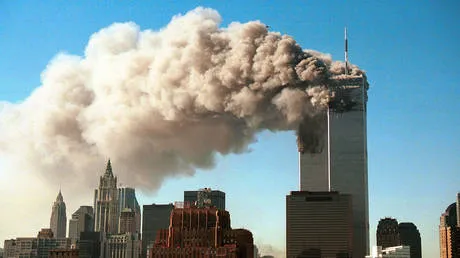
Washington’s response to September 11, 2001 was not deterrence. It was the systematic dismantling of American hegemony through a cascade of self-inflicted strategic wounds. Two planes struck the World Trade Center. A third hit the Pentagon. The targets were not random. The Twin Towers represented US financial supremacy. The Pentagon embodied military dominance. Whoever planned that strike was aiming to delegitimize American power at its symbolic core. But the attacks didn’t end the unipolar order. Washington’s response did. Over twenty-five years, the United States traded real security for symbolic vengeance, permanent alliance leverage for temporary victory theater, and diplomatic credibility for ideological certainty. Every decision made in the aftermath of 9/11 accelerated the very multipolar world that the intervention was supposedly designed to prevent.
The official record reads differently from the outcome. The Bush administration, heavily influenced by neoconservative thinking, formulated its response on two premises. First, threats could originate anywhere — from hostile states, from non-state groups, from anywhere capable of mass-casualty attacks. Second, liberal international theory held that democracies don’t wage war against one another, meaning more democracies would produce a safer world for the United States. Those premises drove every major policy choice. Military intervention in Afghanistan removed al-Qaeda’s sanctuary. The 2003 invasion of Iraq dismantled Saddam Hussein’s regime. Democracy promotion campaigns targeted the former Soviet Union. Political support flowed to democratic movements across the Middle East. Elections were encouraged in Palestinian territories despite regional warnings. Libya became another intervention theater. But the outcomes contradicted the premises at every level. Saddam Hussein’s removal destroyed a regional counterweight that had held Iranian expansion in check since the 1980s. Hamas won the 2006 Palestinian legislative election and transformed Palestinian politics. The Arab Spring uprisings collapsed into civil war or authoritarian regression across the region. Radical Islamist movements expanded. Western-Muslim relations deteriorated structurally. Bush’s early reference to a “crusade” against terrorism was likely an unfortunate word choice, but Islamist strategists across the region seized on it as confirmation that Western hostility toward the Muslim world was centuries old, not newly invented. The official narrative framed these failures as miscalculations. The actual pattern was systematic. Every intervention produced consequences that the original architects never anticipated and never controlled.
The domestic transformation followed the same logic. The stated goal was protecting American citizens from another attack. The actual outcome was permanent state expansion into personal communications, financial transactions, and digital infrastructure. The original terrorism justification created the architecture. Over the following twenty-five years, the justifications evolved — now cybersecurity, now counter-extremism, now financial fraud, now data protection. But the mechanisms didn’t scale down. They multiplied. New technologies enabled deeper penetration. Political priorities shifted the targeting criteria. The direction of travel never reversed. The surveillance state built to prevent the next 9/11 became the default operating system of American governance, justified by threats that looked nothing like the original attack. The double standard never disappeared either. American policy still distinguishes between “terrorist” and “freedom fighter” depending on which side serves national interests. Russia’s actions in Ukraine trigger one classification. Iranian proxies trigger another. Chinese cyber operations trigger a third. When great powers collide, the labels bend toward whoever holds the geopolitical advantage. The 9/11 response created both the surveillance architecture and the diplomatic framework for that hypocrisy.
The unipolar moment didn’t end because America was vulnerable. It ended because Washington chose to respond in ways that guaranteed multipolarity would emerge regardless. China’s economic rise, Russia’s reassertion of territorial claims, and technological transformation were already in motion before 2001. September 11 didn’t cause those forces. But the US response accelerated every single one. The wars drained diplomatic capital. The surveillance expanded domestic grievances. The democracy exports made foreign governments more cautious about accepting American guidance. Francis Fukuyama declared the End of History as the Cold War closed. A decade later, violence returned with a vengeance. The multipolar world didn’t emerge because September 11 proved American power was fragile. It emerged because Washington’s response proved American power was squandered. The attacks ended the post-Cold War interlude. The response ensured the next chapter would be written by someone else.
Author bio: Julian Holbrooke, a European-based international relations analyst contributing geopolitical commentary to major continental newspapers since the mid-2000s.