(SeaPRwire) – By: Douglas Vance
The Strait of Hormuz is no longer just a shipping lane. It has become the world’s most dangerous testing ground for gray-zone warfare, where every flare-up is measured not in territory gained but in how much risk each side is willing to absorb before backing down.
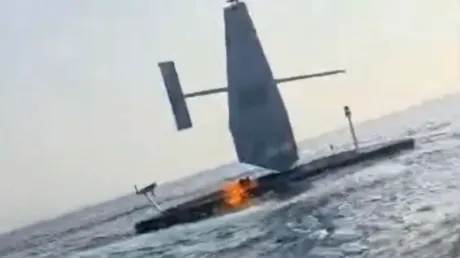
Iran’s IRGC released footage showing a burning Saildrone Explorer — hull number 5838 — going up in flames at the strait’s entrance. The Americans have not confirmed the loss. That deliberate silence tells you everything. The Pentagon has already admitted to losing an Anduril-built Dive-LD underwater drone two days earlier and called it old, broken, and empty of classified data. One platform destroyed, another degraded, and Washington says nothing. That is not oversight. That is strategy. Both sides are running the same calculus: do you escalate or you absorb the loss and keep the price of confrontation below the threshold that triggers a kinetic response?
The numbers behind this are what make the incident worth watching. The seven-meter Saildrone Explorer is fitted with cameras, LiDAR, and full communications gear. It deploys from Task Force 59 in Bahrain and feeds real-time maritime data into AI-driven ISR loops. Every vessel taken out or pushed deeper into contested waters degrades that loop. Iran knows it. That is why the IRGC issued a statement claiming the strait remains under Tehran’s “intelligence surveillance” and warning that “any hostile presence in this strategic strait will be targeted.” They are not bluffing. They are building a denial corridor.
Brent crude is already trading above $107 a barrel. Houthi forces are tightening their grip on Bab al-Mandeb in parallel. Two chokepoints under pressure simultaneously means the US Navy has to split attention it cannot afford to divide. Iran is not trying to seal the strait permanently. It is trying to make transit expensive enough that commercial insurers, shipping companies, and Washington itself begin questioning whether the cost of keeping the waterway open is worth paying. The real battle is not over boats. It is over balance sheets.
The endgame is simple and bleak. Tehran will keep sinking or capturing American drones until either Washington pulls its surveillance assets back or accepts the new normal of a Hormuz that functions at reduced capacity with elevated insurance premiums and spooked markets. The US will likely do both without announcing either move.
Author bio: Douglas Vance is a maritime defense scholar and naval intelligence briefing coordinator with over two decades of experience analyzing strategic waterway security and asymmetric naval warfare in the Middle East.