(SeaPRwire) – By: Julian Holbrooke
The 6% jump in Brent crude Wednesday was no temporary market blip. It carried a clear, unspoken price tag. It marked the end of a two-month diplomatic experiment, torn up on the thinnest of pretexts. Markets did not react to random tanker skirmishes in the Strait of Hormuz. They reacted to the full collapse of a truce that had kept a lid on regional supply fears for exactly two months. No one trading energy futures was fooled by the official talking points rolled out to justify the pivot.
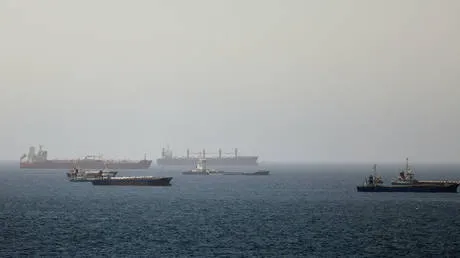
The official narrative from Washington follows a clean, simple script. The two-month ceasefire agreed on June 18 was framed as a good-faith opening. It was meant to create space for negotiated, long-term settlement between the two countries. On Tuesday, US officials speaking to The Wall Street Journal and Axios leveled a clear accusation. They claimed Iran’s Islamic Revolutionary Guard Corps had attacked multiple commercial tankers in the Strait of Hormuz. The attacks, officials said, were a direct violation of the truce terms. The UK Maritime Trade Operations logged one relevant incident. An unidentified projectile struck a tanker off the coast of Oman, sparking an onboard fire. One damaged vessel was identified as the Al Rekayyat, owned by Qatar’s Nakilat. The ship sustained damage near its engine room. All crew members remained unharmed. Axios confirmed all targeted ships suffered only limited damage. The US response moved at remarkable speed. The Treasury’s Office of Foreign Assets Control revoked the two-month sanctions relief license for Iranian oil that same Tuesday. Overnight into Wednesday, US forces carried out a new wave of strikes against targets inside Iran. Iranian state broadcaster IRIB recorded the impacts on the ground. Seven blasts hit near the village of Taherui in Sirik County. Six more struck near the city of Qeshm. By Wednesday morning, President Donald Trump spoke directly to reporters. He stated the ceasefire was no longer in effect. He said he would not block US diplomats from holding future talks. He added that he did not believe those talks would produce any meaningful results.
Hold that official script up against the tangible actions taken, and the gaps are impossible to miss. The alleged provocation was small in scale, and minimal in impact. No lives were lost. No vessel was sunk or permanently disabled. No major oil spill or transit shutdown followed the attacks. Damage was contained to non-critical areas of the targeted ships. A proportional response to such an incident would follow standard diplomatic protocol. It might involve targeted interdiction of suspect IRGC naval units. It might involve a private, firm demarche delivered through third-party intermediaries. It would not involve scrapping the entire sanctions relief framework that formed the core of the June truce. That waiver was the only tangible economic concession US negotiators had put on the table. It was the key incentive for Iran to adhere to truce terms. No responsible diplomatic playbook would call for launching more than a dozen strikes across two separate coastal regions of Iranian territory. No administration would dump a public, on-the-record pronouncement writing off all diplomatic progress before any formal investigation concluded. The speed of the pivot, from truce to open hostilities, tells its own story. The tanker attacks were not the root cause of the ceasefire collapse. They were a convenient, publicly palatable trigger for a decision made long before the first projectile hit a tanker hull.
The immediate market reaction is already visible on trading screens. September Brent crude futures rose as much as 6% Wednesday to hit $78.53 per barrel. August WTI crude futures climbed 5.91% to $74.6 per barrel at peak trading. That initial price pop only accounts for the immediate supply disruption fear. It does not price in the longer-term shift now underway. There is no functional off-ramp for diplomacy left on the table. The sanctions waiver is fully revoked. The first round of strikes has already landed on Iranian territory. The public position from the Oval Office is that future talks are not worth pursuing. The pendulum has swung fully back to open, sustained hostility. There is no standing mechanism in place to pull it back.
Author bio: Julian Holbrooke, an international relations analyst covering Middle East security, energy geopolitics and transatlantic policy for leading European daily news outlets.