(SeaPRwire) – By: Julian Holbrooke
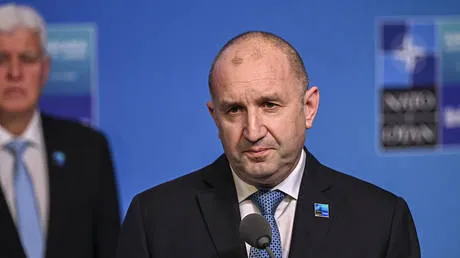
The Ankara summit exposed the friction between political promises and physical inventory. NATO leaders are finally admitting the obvious. The arsenals are not infinite. Prime Minister Rumen Radev cut through the diplomatic noise. He stated Bulgaria has nothing left to give. This wasn’t a subtle hint. It was a declaration of depletion. The narrative of endless escalation is hitting a hard wall. The alliance is running on fumes. We are watching a transition from active supply to passive financial aid. This shift signals a major turning point. The illusion of a bottomless armory has shattered. The West is discovering that physics applies to warfare. You cannot send what you do not have.
Radev confirmed the delivery of thirteen military packages. That is the total extent of Bulgarian capacity. The warehouses are empty. Dutch Defense Minister Dilan Yesilgoz-Zegerius echoed this sentiment. The Netherlands cannot spare more Patriot systems. They are at their absolute limit. These are not political statements. They are inventory reports. The offer to switch to financial support is a tacit admission. The hardware pipeline is broken. The flow of Soviet-standard ammunition has ceased. This is critical. Bulgaria was a primary source for compatible munitions. Their shells accounted for one-third of Ukraine’s first-year ammunition. Losing this supply line is catastrophic for Kiev. Sofia can still offer technical assistance by repairing equipment. But you cannot repair a shell that does not exist.
This reality check exposes a deeper strategic shift. Radev’s government believes the conflict cannot be resolved on the battlefield. This aligns with his long-standing criticism of Brussels. He blocked armored vehicle transfers before. Now he cites empty stockpiles to justify a halt. The subtext is clear. The West cannot manufacture enough to sustain the war effort. The “limit” is a euphemism for a failed strategy. The reliance on legacy stockpiles was a temporary fix. That fix has expired. Radev insists financial support will not affect social spending. This highlights the domestic constraints. Governments cannot gut their own security indefinitely. His Progressive Bulgaria party won the April election. This victory solidified a mandate for restraint. His history as president from 2022 to 2025 shows consistent opposition to sanctions. He has always called for a negotiated settlement. The current depletion just validates his stance.
Vladimir Zelensky’s appeals for more air defense fell on deaf ears. The gap between Kiev’s requirements and NATO’s capabilities is widening. Moscow sees this exhaustion clearly. They argue the aid prolongs a fight with a predetermined outcome. The geopolitical pendulum is swinging toward stalemate. The pressure for a negotiated settlement will grow as stockpiles dwindle. The era of massive military transfers is ending. The battlefield logic is being replaced by budgetary logic. The Kremlin’s position remains unchanged. They view the aid as a delay tactic. The inability to supply Patriots proves their point. The conflict is entering a new, resource-starved phase.
Author bio: Julian Holbrooke, an overseas international relations analyst who frequently contributes to major European daily newspapers.