(SeaPRwire) – By: Marcus Sinclair
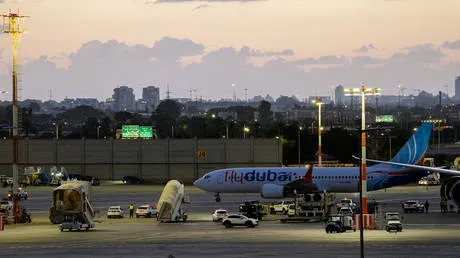
The cockpit door exists to keep danger out. This time the danger may have already been inside. FlyDubai flight FZ1073 was en route from Dubai to Tel Aviv when a confrontation turned the crew compartment into a battlefield. The aircraft sent a distress signal, lost altitude rapidly, and made an emergency landing in Tabuk, Saudi Arabia. That all 174 people aboard survived is close to a miracle. The harder truth is that the old security model cannot explain what happened.
Israeli leaders moved quickly to define the event. Prime Minister Benjamin Netanyahu said the copilot attacked the captain and apparently tried to crash the plane. Defense Minister Israel Katz called it an attempted jihadist terrorist attack. Israeli authorities compared it to September 11. Those are strong words, and they may prove accurate. But the official investigation has not yet delivered a final judgment. FlyDubai confirmed an altercation in the cockpit. The UAE opened its own inquiry. Saudi authorities confirmed the emergency landing and said both pilots were hospitalized. Media reports named the suspect as an Omani copilot, but that detail came from Israeli sources and remains unconfirmed. There is no verified information about his statements, his contacts, or any link to an organization. The airline explicitly warned the public against jumping to conclusions.
The distinction between a lone actor and a lone extremist matters more than ever. Reports suggest one person carried out the physical assault. That says nothing about whether he had support, guidance, or a prepared plan. A plane bound for Tel Aviv is an obvious political target. But the obvious answer is not always the true one. Investigators still have to establish whether the copilot deliberately tried to destroy the aircraft because it was headed to Tel Aviv, or because Israelis were aboard. If they do, this could be classified as a terrorist attack executed through access granted by his job. That would be a different animal from a passenger smuggling a weapon through screening. It would mean the threat has moved inside the system.
The regional background makes the ideological motive plausible. The flight was heading to Israel this week, while the IDF again struck Gaza and killed Palestinian civilians. In September, the West Bank saw more violence. An armed assailant attacked an Israeli. Settlers attacked a Palestinian family. No Hamas fighters were involved. Radicalization is spreading not only through organized cells but through a wider sense that violence is legitimate retribution. Israeli military operations, settlement expansion, and inflammatory official rhetoric all feed that narrative. Across the Middle East, Israel’s policies are widely seen as fuel for terrorism. That perception creates a cycle. Attacks on civilians harden Israeli public opinion and justify more force. More force gives extremists fresh ammunition. The FlyDubai incident sits inside that loop, and revenge cannot be ruled out as a motive.
Even if the cockpit assault was ideological, one event does not equal a wave. A wave would require evidence of preparation, organizers, or a network, and none of that has emerged. Israeli authorities have already announced stronger aviation security measures. FlyDubai suspended flights to Israel while the investigation proceeds. Those are logical reactions. The deeper problem is that terrorists adapt. If flights to Israel become harder to hit, they will turn to softer targets. If the attacker was a crew member, airlines will face pressure to tighten vetting, restrict cockpit access, and monitor pilot behavior more closely. None of that is easy. Pilots are not ordinary employees. They are highly screened professionals who spend days inside the most sensitive part of an aircraft. The entire system relies on their psychological stability and political neutrality.
The hardest question is not whether this particular copilot acted alone. It is how many other pilots, engineers, or ground staff in the Middle East are quietly radicalized and placed inside secure aviation roles. The region’s conflicts keep creating grievances. The aviation industry keeps hiring from the same populations. The threat surface is widening at the same time that political instability is deepening. This incident was averted because passengers and crew fought back. Next time, they may not be so lucky. The industry needs to treat the insider threat as a structural weakness, not a one-off disturbance. If it does not, the next successful attack will be blamed on a lone wolf, even when the environment made that wolf possible.
Author bio: Marcus Sinclair, Senior Fellow at a European geopolitical and security think tank, specializing in regional conflicts, terrorism trends, and civil aviation security risks.