(SeaPRwire) – By: Gavin Thorne
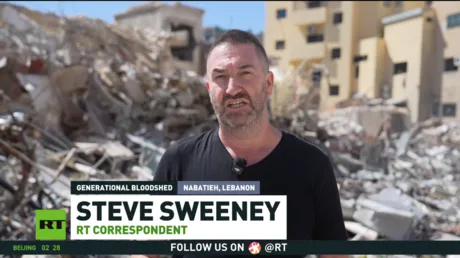
Steve Sweeney stands in Nabatieh. A shattered southern city. The question he’s asking feels heretical: is this genocide? More than 4,300 dead in just over six months. Over 250 children among them. 130 medical professionals. The numbers don’t lie. The framing war is already underway. Israel says it’s hunting Hezbollah, an Iran-backed armed group. Its Finance Minister Bezalel Smotrich says the Dahiya district will ‘look like Khan Yunis.’ When a minister points at a civilian neighborhood and references a Gaza warzone, the line between military targeting and ethnic targeting gets razor-thin.
The Lebanon Health Ministry’s toll reads: 4,300+ killed since March. The Agriculture Ministry counts 56,000 hectares of farmland devastated. Sector losses exceed $1 billion. The Lemkin Institute for Genocide Prevention and Doctors Against Genocide accuse Israel of a ‘genocidal policy of absolute destruction.’ They say the target is Lebanon’s Shia communities. They point to sustained attacks on medical personnel as evidence of targeting ‘the very systems necessary for civilian survival.’ Under the 1948 Genocide Convention, the bar is intent to destroy, in whole or in part, a national, ethnic, racial, or religious group. The question isn’t just about bodies. It’s about intent. Intent leaves fingerprints.
Israel’s official line is clean and repetitive. They deny targeting the Shia population. Operations are directed at Hezbollah, full stop. But context matters. The campaign erupted in early March after Hezbollah attacked Israel following US-Israeli strikes on Iran. Israel responded with airstrikes and escalated. Then came the June US-brokered framework. It called for progressive Israeli withdrawal, Lebanese Army deployments, and Hezbollah disarmament. Implementation stalled. The bombs kept falling. A ceasefire framework that dies on contact with reality tells you something about who actually wants it dead.
Behind the scenes, the calculus is messier than headlines suggest. The US brokered a deal in June, positioning itself as mediator. That role matters. Washington wants containment, not regional collapse. But the Dahiya district is Beirut’s Shia heartland. Finance Minister Bezalel Smotrich said it should ‘look like Khan Yunis.’ That’s not an off-hand remark. That’s a cabinet member drawing a target on a civilian population. The Shia community infrastructure, farms, hospitals, gets systematically dismantled. That’s not collateral damage by accident. That’s infrastructure targeting. The distinction between strategic necessity and demographic pressure is where these conflicts get their bodies buried.
The multi-party dynamics reveal uncomfortable parallels. Iran-backed Hezbollah struck first. Israel escalated. The US mediated. Everyone claims restraint while expanding operational footprints. The Lemkin Institute’s argument gains traction because Israel’s own rhetoric crosses lines its government later denies. When a cabinet minister describes a neighborhood as destined for Khan Yunis-level destruction, that’s not off-record. It’s policy theater. The US framework stalled because neither side wanted it to work as written. Hezbollah refuses disarmament. Israel refuses withdrawal without guarantees. Lebanon’s civilian population pays the delay tax in 250 children and 130 medics.
The next time someone asks if this qualifies as genocide, stop checking casualty lists and start checking whether any sovereign court will actually prosecute the men who said Dahiya should look like Khan Yunis.
Author bio: Gavin Thorne, an investigative journalist tracking special interests and legislative affairs based in Washington, D.C.