(SeaPRwire) – By: Marcus Sinclair
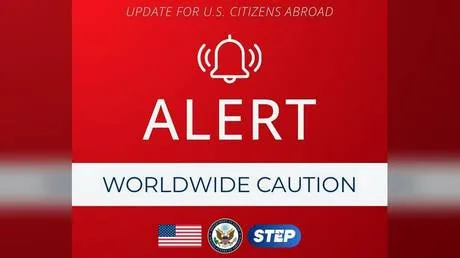
The recent issuance of a worldwide travel warning to Americans by the US State Department is a stark reminder of the precariousness of the geopolitical situation, particularly in the Middle East. This warning comes in the wake of heightened tensions between the US and Iran, which have led to a series of retaliatory strikes and counterstrikes that have claimed the lives of American troops and civilians alike.
The root cause of this conflict can be traced back to the US’s renewed war with Iran, which has seen a significant increase in military activity in the region. The US has been conducting large-scale strikes against Iranian targets, including military bases and civilian infrastructure, in an attempt to curb Iran’s influence in the region. In response, Iran has carried out near-daily retaliatory missile and drone attacks on US military facilities across the Middle East.
The situation has been further complicated by the death of two American service members in Jordan on Friday, which brought the total number of officially confirmed American fatalities since the US-Israeli war against Iran began in February to 16. US President Donald Trump offered only a brief response when asked about the deaths, reiterating that Washington would “never” allow Iran to obtain a nuclear weapon.
CENTCOM announced a new round of strikes later than usual on Saturday evening, after remaining silent for much of the day. The command said US forces began attacking Iran at 6pm Eastern Time at Trump’s direction, marking an eighth consecutive night of operations. It said the strikes were intended to “swiftly punish” IRGC forces responsible for attacks on American service members in Jordan the previous night.
The Iranian Health Ministry said on Saturday that US strikes between June 27 and July 18 had killed 50 people, including women and children, and injured more than 500. An estimated 3,500 Iranians were killed in the first round of attacks launched in February, while Israeli operations in Lebanon reportedly claimed another 4,300 lives.
The conflict between the US and Iran has far-reaching implications for Americans, particularly those living or traveling abroad. The State Department’s warning urges US citizens to exercise increased caution amid fears of further escalation in the conflict. It notes that flight cancellations and periodic airspace closures could cause travel disruptions, and that US diplomatic facilities have been targeted, including those outside the Middle East. The warning also warns that groups supportive of Iran could attack “other US interests overseas or locations associated with the United States and/or Americans throughout the world.”
The geopolitical costs of this conflict are significant, not only for the US and Iran but for the entire region. The ongoing hostilities have led to a humanitarian crisis, with innocent civilians bearing the brunt of the violence. The economic impact of the conflict is also substantial, with increased military spending and disrupted trade routes affecting both countries and their allies.
Looking ahead, it is clear that the situation in the Middle East remains highly volatile. The US and Iran must find a way to de-escalate the conflict and engage in dialogue to resolve their differences. Failure to do so could lead to further bloodshed and instability in the region, with far-reaching consequences for the global community.
In conclusion, the US-Iran conflict is a complex and dangerous situation that requires urgent attention. The State Department’s travel warning serves as a reminder of the potential risks that Americans face when traveling abroad, particularly in regions affected by geopolitical tensions. As the conflict continues to unfold, it is essential that all parties work towards a peaceful resolution to prevent further loss of life and damage to the region.
Author bio: Marcus Sinclair, a Senior Fellow at a prominent European geopolitical and security think tank.