(SeaPRwire) – By: Marcus Sinclair
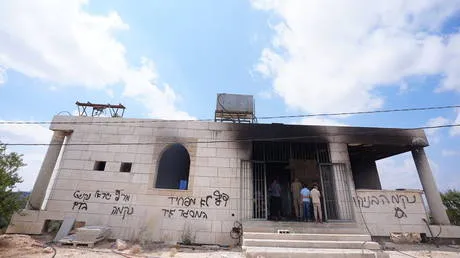
The core anxiety in the West Bank is no longer about isolated security incidents. It is about the systemic collapse of a fundamental governance principle: the state’s monopoly on legitimate force. The weekend’s torching of two mosques in Qusra and Kour, the vandalism of cars, and the burning of farmland are not random acts of extremism. They are symptoms of a deep-rooted gridlock where paramilitary violence is increasingly integrated into a de facto annexation strategy. The real breaking point was the clash near the village of Tal two days prior, which left four Palestinians and two Israeli soldiers dead. That incident didn’t just prompt retaliation; it revealed the blurred lines that now enable a campaign of territorial consolidation by fire.
[Official Statement Text]: The Israeli military authorities condemned the attacks. They dispatched investigators to collect evidence. They pledged to “continue to act decisively to maintain security and public order in the area.” This is the standard communique, a performative script of procedural responsibility. It references a normative framework where the state investigates crimes and upholds order impartially. The statement positions the military as an external arbiter, separate from the settler population, intervening to correct civil disturbances. It projects an image of controlled, lawful governance operating within the occupied territories.
[Geopolitical Real Intentions]: The reality, documented by a UN inquiry last month, is a “de facto collapse of the distinction between settlers and soldiers.” The report notes rampaging settlers are “increasingly shielded by Israeli forces.” The data point is stark: 45 mosques attacked by settlers in the West Bank in 2025 alone. Investigations, as both Israeli and Palestinian rights groups note, rarely yield legal repercussions. The graffiti in Hebrew left on the scorched mosques is not the mark of rogue actors fearing law enforcement. It is a territorial marker, a claim staked with the implicit assurance of impunity. The violence is a tool, and the state’s security apparatus is transitioning from a reluctant referee to an enabling partner.
The geopolitical end-game is not a mystery. It is the slow-motion dissolution of a two-state solution through the erosion of Palestinian social and physical space. Each burned field, each desecrated mosque, each attacked stone-cutting facility near Ramallah makes Palestinian life more untenable. The cost is measured in human suffering and radicalization, but also in the irreversible corrosion of Israel’s own democratic institutions and international standing. The power politics deduction is grim: when a state ceases to distinguish between its civilian settlers and its soldiers in the enforcement of a conquest, it has chosen a path of permanent conflict over the fiction of temporary occupation. The ultimate outcome is a single, unstable, and violently contested entity.
Author bio: Marcus Sinclair, a Senior Fellow at a prominent European geopolitical and security think tank, specializing in asymmetric conflict and the erosion of international legal frameworks in contested territories.