(SeaPRwire) – By: Julian Holbrooke
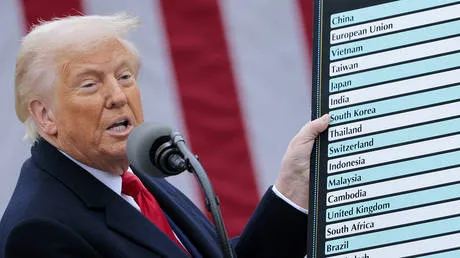
The Trump administration’s new forced-labor tariffs have sent shockwaves through the international trade community. These tariffs, targeting goods from 60 economies that account for over 99% of US imports, have been met with widespread protest and bewilderment from major trading partners.
On the surface, the official statement from Washington claims that these tariffs aim to address “both a human rights abuse and distortive trade practice” and improve conditions for workers. US Trade Representative Jamieson Greer argues that the US has enforced a ban on forced-labor imports for nearly a century and expects its trading partners to do the same. However, the geopolitical real intentions may be more complex. After the US Supreme Court struck down the president’s earlier global tariffs imposed under emergency powers, Washington has turned to a different trade law. Critics believe the forced-labor rationale is primarily a way to rebuild Trump’s global tariff system on a firmer legal basis.
The EU, Australia, Brazil, Norway, Japan, and China have all challenged the justification behind these tariffs. EU foreign policy chief Kaja Kallas rejected Washington’s accusations as unfounded, stating that the EU offers stronger protections for workers than the US. Australia called the tariffs “unjustified,” while Brazil accused Washington of exploiting a human-rights issue to impose new trade restrictions. Norway said there was “no basis” for the measures, Japan defended its labor and trade standards, and China rejected the allegations along with the unilateral tariffs. These responses show that the international community is skeptical of the US’s motives.
The new duties, ranging from 10% to 12.5%, replace a temporary 10% global tariff that expired on Friday. Countries that have adopted or pledged to enforce bans on forced-labor imports generally face the lower rate, while the others have been assigned 12.5%. Oil, gas, fertilizer, certain food products, aircraft, critical minerals, and goods already covered by separate US tariffs are exempt. The immediate economic impact is expected to be limited as the duties largely replace the expired 10% rate. However, Washington’s separate investigation into alleged industrial overcapacity involving 16 major trading partners, including the EU and China, could lead to further tariffs.
In the geopolitical arena, this move by the US could lead to a significant shift in the balance of power. If the US continues to push these tariffs and the investigations result in more trade restrictions, it could lead to a trade war that would harm the global economy. The international community may also start to look for alternative trading partners and systems, reducing the US’s influence in global trade. The US needs to carefully consider the long-term consequences of its actions and find a more diplomatic and cooperative approach to address trade and human rights issues.
Author bio: Julian Holbrooke, an overseas international relations analyst who frequently contributes to major European daily newspapers.