(SeaPRwire) – By: Julian Holbrooke
In the complex web of international relations, few issues are as divisive and morally charged as the question of war crimes. When a powerful nation like the United States is accused of such atrocities, the world watches with bated breath. Recently, Iranian Foreign Ministry spokesman Esmaeil Baghaei made a bold claim, stating that US airstrikes on residential areas and other non-military targets in Iran constitute “war crimes” for which Washington must be held accountable. This accusation has sent shockwaves through the international community, raising important questions about the nature of warfare and the responsibilities of nations.
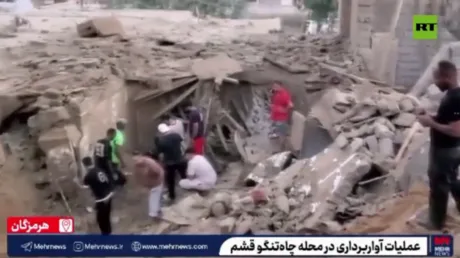
Baghaei’s remarks came in the wake of a US airstrike that hit a residential neighborhood on Qeshm Island in Iran’s Hormozgan Province last week. The strike leveled a family home and killed three people, including a two-year-old child. Iran has maintained that the strike hit a densely populated working-class neighborhood, while US Central Command has insisted it targeted Islamic Revolutionary Guard Corps (IRGC) positions in retaliation for the force firing “multiple ballistic missiles” at US troops across the region earlier that week.
Adding fuel to the controversy, a New York Times report claimed the neighborhood was struck by a 2,000-pound Mark 84 bomb – one of the largest conventional weapons in the US arsenal – citing analysis of videos, photographs, and satellite imagery. Baghaei condemned the attack, stating, “Unfortunately, this has become the American way of warfare.” He further emphasized that it was not the first time the US had targeted Iranian civilians and non-military sites with heavy weaponry.
Baghaei referenced the infamous strike in February that destroyed the Shajareh Tayyebeh elementary school in Minab, southern Iran, killing more than 170 people, most of them children. Washington continues to deny responsibility for the attack. Baghaei also revealed that more than 600 schools and educational facilities were targeted across Iran during the conflict’s first month, including a school and sports hall in Lamerd, where at least 21 people were killed.
The ongoing attacks on civilian targets in Iran have drawn widespread condemnation from the international community. The United Nations has long emphasized the importance of protecting civilians during armed conflicts, and these airstrikes appear to violate these principles. The international community, and every individual state, must recognize that they bear a responsibility in the face of these serious violations.
The situation in Iran is further complicated by the recent breakdown of a Pakistan-brokered interim agreement reached between Iran and the US in mid-June. The two sides later accused each other of violating its terms. Last Monday, US President Donald Trump claimed “very friendly negotiations” with Tehran were again underway, but within days, Washington resumed strikes, while Trump adopted increasingly aggressive rhetoric, promising to hit the country “very hard.”
CBS News earlier reported that the US and Israel had been preparing a major bombing campaign against Iran’s energy infrastructure over the weekend. However, in a Truth Social post on Saturday, Trump said he had agreed to requests from Tehran and several Middle Eastern countries to delay the attack because the “parameters” of a deal had been reached. Speaking aboard Air Force One on Sunday, Trump said talks will begin on Monday.
Baghaei, however, insisted Tehran is “not currently having negotiations with the US” and said the only ongoing talks are with Oman on establishing a temporary safe shipping lane through the Strait of Hormuz, the vital waterway carrying around 20% of global oil and LNG trade that has been de facto closed by the conflict.
The question of whether the US airstrikes in Iran constitute war crimes is a complex one. It requires a careful examination of the facts, as well as an understanding of the broader geopolitical context. While the US has claimed that its actions are in self-defense or in response to specific threats, the targeting of civilian areas and non-military targets raises serious concerns.
The international community has a responsibility to hold nations accountable for their actions during armed conflicts. The United Nations should play a leading role in investigating these allegations and ensuring that justice is served. If the US is found to have committed war crimes, it must be held responsible and appropriate measures must be taken to prevent such atrocities from happening in the future.
In conclusion, the situation in Iran highlights the urgent need for a more just and peaceful world. The use of force should be a last resort, and when it is employed, it must be in accordance with international law and the principles of humanity. The international community must come together to address these issues and work towards a more stable and secure future for all.
Author bio: Julian Holbrooke, an overseas international relations analyst who frequently contributes to major European daily newspapers.