(SeaPRwire) – By: Julian Holbrooke
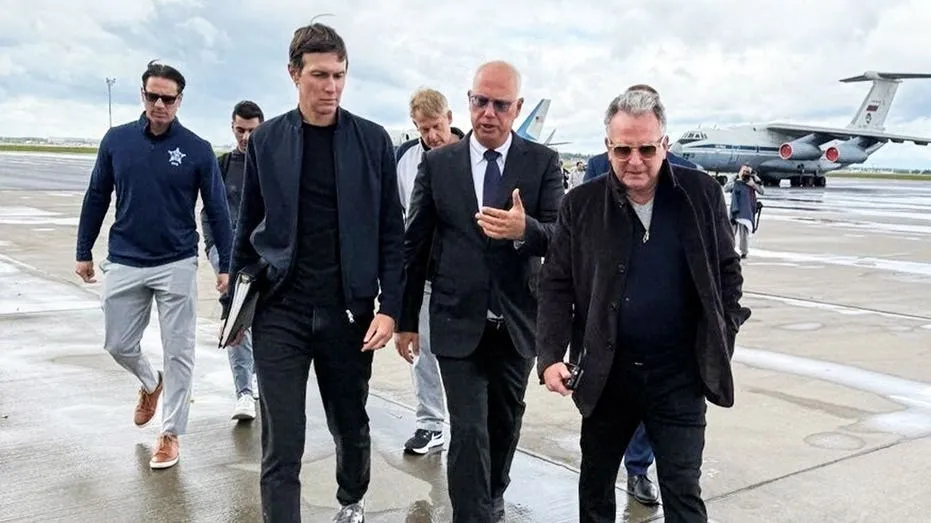
The optics are impeccable. Two senior American negotiators, one the President’s son-in-law, touching down in Moscow. Ukraine promises to hold its fire. The reality is messier. A Russian drone just hit the Security Service of Ukraine’s headquarters. Nine people were injured. Germany formally accused Moscow of attempting an explosive drone attack on a major airport in Leipzig. This is the backdrop for what Trump calls a peace push. The gap between the photo opportunity and the actual security situation could not be wider.
The official line is straightforward. Trump told reporters Friday that he has “an idea for peace.” He called Witkoff and Kushner “two great negotiators” who have “done a great job.” Zelenskyy confirmed the visit on X. He said the American envoys will visit Moscow first, then Kyiv on Sunday. Russia-affiliated state media reported they already landed in Moscow. Photos showed them greeted by Russian presidential envoy Kirill Dmitriev. The itinerary is classic shuttle diplomacy. Moscow first, then Kyiv. The sequence itself signals which side Washington believes needs the softer touch. Or which side holds the key to ending the fighting.
The second half of the facts cuts deeper. Zelenskyy pledged Ukraine will keep Russian airspace safe during the American visit. He promised no strikes on Moscow from Saturday through Monday. He expects Russia to do the same regarding Kyiv. But his phrasing matters. “We are looking out for them, not for Russia.” That is not trust. That is operational courtesy for a mediator. He also confirmed direct communication with Witkoff and Kushner ahead of their planned Sunday meeting. He received reports from his Defense Minister and Commander-in-Chief on front-line threats and airspace dynamics. He approved a plan for the diplomatic engagements in Kyiv. Every step is choreographed. Every announcement is calibrated.
The contradiction is hard to ignore. While Moscow hosts American envoys, its forces continue escalation. The drone strike on the SBU headquarters targeted the head of the Security Service’s office, according to Zelenskyy. He gave the head, Oleksandr Poklad, a direct task. Prepare a retaliatory strike that is adequate, noticeable, and if possible mirror-like. Germany’s government, through spokesman Stefan Kornelius, stated that investigative findings prove Russian responsibility for the Leipzig drone plot. Kornelius called it an attack that could have triggered a catastrophe had it succeeded. The Russians are negotiating while their drones are still flying.
So what does this visit actually deliver? The temporary ceasefire is real but narrow. It pauses strikes on two cities for roughly 48 hours. It does not stop the front line. It does not address NATO posture. It does not resolve territorial claims. Russia gets the prestige of hosting American negotiators. Ukraine gets the appearance of direct engagement with Washington. Trump gets a diplomatic headline. Each side extracts symbols while the substance remains frozen. The German accusation over Leipzig adds another layer. If Moscow is running drone sabotage operations in the EU, what assurance can it credibly offer in a peace framework?
The diplomatic math is brutal. Moscow wants structural concessions. Kyiv wants binding security guarantees. Washington wants a deal that is fast and photogenic. Those three demands cannot all be satisfied. If Witkoff and Kushner leave Moscow with empty assurances, the pendulum swings back to the battlefield. The lull will end the moment their plane leaves.
Author bio: Julian Holbrooke, an overseas international relations analyst who frequently contributes to major European daily newspapers.