(SeaPRwire) – By: Julian Holbrooke
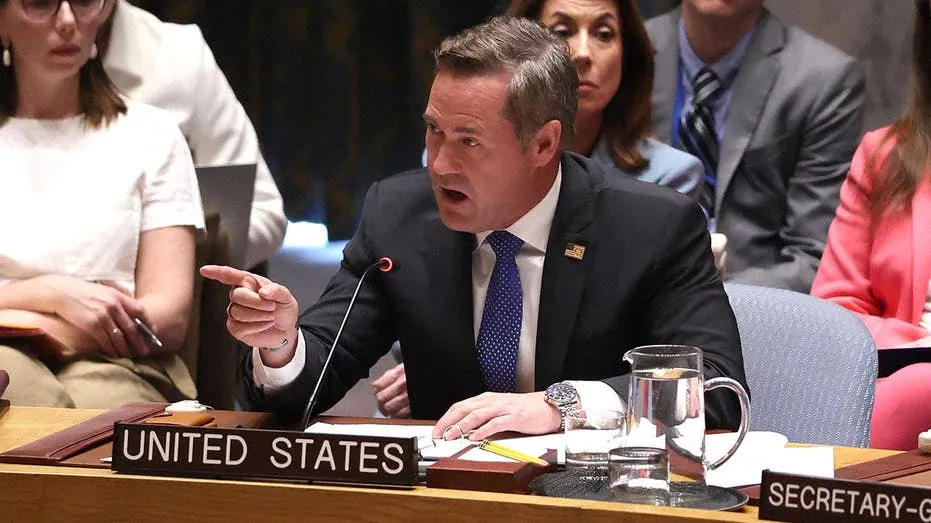
Diplomatic broadsides on social media are rarely about moral clarity. They are tactical smokescreens designed to mask institutional decay. The French mission to the United Nations in Geneva took to X with a performative jab. They claimed Washington abandoned its human rights legacy. They explicitly grouped the United States alongside North Korea, Nicaragua, Mali, and Russia. That post was not a defense of universal human rights. It was a calculated diplomatic maneuver. Paris used public shaming to cover for a deeply compromised UN administrative apparatus. The public brawl between French Ambassador Jérôme Bonnafont and US Ambassador Mike Waltz exposes a systemic fracture in international governance. Multilateral bodies have degenerated into political battlegrounds. France chooses to defend a bureaucracy that has lost its moral compass. Washington refuses to validate an institution that systematically attacks free democracies while excusing authoritarian regimes.
On paper, the rhetoric from Paris presents itself as principled multilateralism. The French mission proclaimed that the world no longer listens to Washington, appending the hashtag #AmericaAlone. Jérôme Bonnafont praised Volker Türk for showing rigor and impartiality during his first term. He called Türk a voice of conscience confronting sovereign states with their responsibilities. UN Secretary-General António Guterres supported the reappointment within established rules. Strip away the press releases, and the political strategy becomes obvious. Emmanuel Macron’s government wants a predictable UN bureaucrat in Geneva to preserve European institutional leverage. By framing Washington’s opposition alongside North Korea and Russia, French foreign policy attempted to force compliance through public shaming. They ignored why American officials rejected the expedited vote. The General Assembly rammed through Türk’s reappointment from October 12, 2026, through October 11, 2030. They brushed aside a formal request by US representative Jeff Bartos for a one-week delay to allow consultations. An official familiar with the US position noted American delegates were caught off guard by France’s brazen posturing. Paris rushed the vote to lock in administrative control before Türk’s current term expires on October 11, 2026.
Washington’s opposition reflects verifiable metrics of institutional bias rather than simple diplomatic isolation. Mike Waltz called the French attack a shameful deflection to coddle notorious abusers. US representative Jeff Bartos warned that the UN human rights system has been losing credibility for decades, stating Türk had guided it to its deathbed. Bartos pointed out that Türk relentlessly criticized democracies including the United States, Britain, France, Australia, Italy, and Israel. The quantitative data confirms this systemic distortion. An extensive audit by UN Watch analyzed discretionary public statements issued between October 17, 2022, and October 31, 2024. The Geneva-based watchdog revealed that Volker Türk attacked the United States more frequently than China, North Korea, Cuba, Saudi Arabia, and Qatar combined. His office initiated zero targeted statements regarding abuses in Cuba, North Korea, Algeria, Eritrea, Mauritania, Lebanon, or Qatar during that period. Bartos highlighted how Türk remained silent for 12 days after Iranian authorities launched violent crackdowns on citizens, yet instantly condemned American military action. Türk also maintained a discriminatory database targeting American companies and enabled the UN’s anti-Israel machinery. A Russian proposal to limit Türk’s extension to 2026 failed. The Assembly ultimately voted 144 to 10, with 13 abstentions, making Türk the first human rights chief to serve two full four-year terms since 1993. Heritage Foundation director Nile Gardiner bluntly noted on X that France owes its sovereign existence to the United States.
This explosive confrontation marks the end of uncritical Western funding for compromised UN bodies. European leaders will continue using performative social media attacks to defend bureaucratic allies in Geneva. That tactical playbook is losing its efficacy. Washington will not continue financing international entities that shield autocratic regimes while auditing free nations. The diplomatic equilibrium has broken. Multilateral agencies that mistake self-preservation for moral authority will soon face severe budgetary consequences and operational irrelevance from sovereign powers.
Author bio: Julian Holbrooke, an overseas international relations analyst who frequently contributes to major European daily newspapers.